
Firstly, yes, “Prometheus” is a prequel to “Alien.” 20th Century Fox has played coy with the pre-release details for a reason, hoping to create generous buzz and a bit of mystery surrounding a sensitive production. Unfortunately, it’s not an especially satisfying prequel to “Alien,” doing away with the original’s spare sense of terror and exposure to play this sci-fi world as a blunt instrument, hitting the viewer in the face with crude violence and spotty philosophy. While the return of director Ridley Scott to the franchise he originally shaped should be cause for celebration, yet the master visualist can’t find a perfect posture for material that teases the good stuff and embellishes the routine. “Prometheus” isn’t nearly as cinematically daring and intellectually stimulating as the filmmakers seem to think it is.
In the future, archeologist Elizabeth Shaw (a fantastically committed Noomi Rapace) and lover Charlie Holloway (Logan Marshall-Green) have discovered a series of star maps left behind by alien gods who originated human life, pointing to a location in the far reaches of the universe. With the launch of the spaceship Prometheus under Captain Janek (Idris Elba, buried somewhere underneath an incomprehensible southern accent), Shaw and Holloway are off to find the source of life on an alien moon, joined by a crew of geology and biology experts (played irritatingly by Rafe Spall and Sean Harris), android David (Michael Fassbender, capturing robotic irritation superbly), and frosty Weyland Corporation rep, Meredith Vickers (Charlize Theron, doing little in a superfluous role). Once landed, the crew discovers a temple of mysterious creatures and malicious liquid, requiring intense study back on the Prometheus. However, this indomitable scientific/spiritual mission doesn’t go as planned, with Shaw gradually understanding the enormity of her discoveries and their catastrophic potential.
We’ve come a long way since the release of 1979’s “Alien,” which spawned three sequels and two abysmal spinoffs (the “Alien vs. Predator” debacles), leaving little direction for a new adventure to take. With prequels the trend, prequels it shall be, though “Prometheus” makes very careful interpretive moves in the early going to distance itself from the franchise. Gone is the threat of a goopy, acid-blooded invader, replaced with a provocative question of creation, developed in a clunky script by Damon Lindelof and Jon Spaihts. Indeed, “Prometheus” examines the origins of life on Earth, using a cryptic plan of DNA born from an ivory-skinned, oversized “engineer” as a starter pistol for this ambiguous viewing experience. Admittedly, it’s a bold idea, mining the best ambitions of the genre as it questions the world around us, making the audience consider an extraterrestrial manipulation as the genesis for humanity instead of a heavenly order ruled by religion or scientific instinct. Heavy stuff, though the writing never gets past a superficial argument of evolution, refusing introductory debates to solidify the backstory early, with little understood about the mission’s build-up beyond its exploratory intent.
“Prometheus” hints at a cerebral odyssey, with the character of David symbolizing another layer of godly construction intended to amplify discomfort in the room, especially when the android shows signs of malice that, strangely, nobody questions. The script teases a few analytical and emotional directions, but seems intent on replicating the “Alien” experience, following the same formula of discovery and survival as before, though this enemy isn’t a familiar one. At least not yet. However, the change in surroundings does nothing to disrupt a sense of repetition, observing Shaw and the gang open Pandora’s Box to find a raging evil inside, though one with a puzzling intent that’s never fully realized (cruelly, the film ends with a cliffhanger). It’s actually quite deflating to see “Prometheus” stomp inside “Alien” footprints, especially since Scott has 33 years of hindsight to work with, more than enough time to take the premise in an exciting, innovative direction. Sadly, much of the movie falls flat, with predictable beats of danger repainted with updated tech and creature design. Scott’s more interested in noise pollution this time around, not invigorating originality.

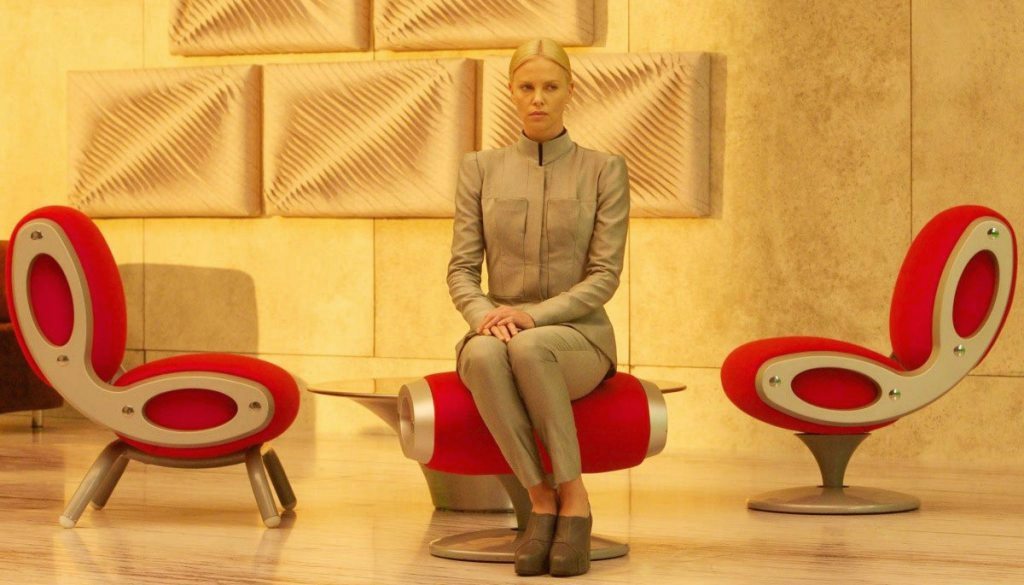
While the script is disappointing and annoyingly expository, with one-dimensional supporting players parading around personality quirks to stand out from the pack, the design of “Prometheus” is remarkable, from memorable costumes to the exceptional visual effects, bringing a world and its godly inhabitants to life, goosed by inventive 3D imagery. Although the connections between “Prometheus” and “Alien” don’t fit perfectly (think the glossy “Star Wars” prequels compared to the handmade quality of the original trilogy), the upgraded sci-fi toys are interesting, climaxing in one devilish scene where a character endures impromptu surgery inside the suffocating confines of a medical pod, watching robot arms work their horrifying expertise. There are imaginative probes and spaceships to explore, and the planet/temple examination is an intriguing mix of intimidating H.R. Giger interiors and Mars-esque planetary volatility. Scott can be counted on for substantial images peppered with menace, but a lack of storytelling bravery does him in, making “Prometheus” ultimately appreciated for its technical mastery and grand scale than any turns of its plot.
“Prometheus” is engineered to keep the viewer questioning. To keep the “Alien” mythology fluid enough to fuel future sequels. There are few answers to the mysteries provided, and that could be appealing to certain audiences out there in the mood for a puzzle with no apparent solution. The feature is good about introducing fresh creatures and realms, but fails to wrap up the ambiguity into a measured, thoughtful whole, worth further dissection in a new round of sequels (if that day even comes). It’s tough to be the lone blockbuster in the marketplace with more on its mind than a parade of explosions, but “Prometheus” doesn’t offer much beyond tantalizingly brief discussions of creation and mystifying monster outbreaks. It’s difficult to discuss the true limitations of the film without exposing a wealth of spoilers, but it seems Ridley Scott has already spoiled enough by returning to the realm of his finest work without a clear exit strategy.
C
 BRIAN ORNDORF
Leave a comment