Summer
ends with David Lynch’s “Twin Peaks: Fire Walk with Me,” Nicolas Cage
unraveling in “Honeymoon in Vegas,” and Edward Furlong screeching through “Pet
Sematary II.”

Twin
Peaks: Fire Walk with Me
Nutshell:
The brutal murder of Teresa Banks brings Agent Desmond (Chris Isaak) and Agent
Stanley (Kiefer Sutherland) in to investigate the crime, coming across evidence
of a serial killer employing specific targets and leaving cryptic clues. Years
later, we find Laura Palmer (Sheryl Lee) suffering in Twin Peaks, using drugs
and prostitution to numb her flattened soul, fearful of Bob (Frank Silva), the
demon who visits her bed and torments her dreams. Caught between lovers while
trying to keep friend Donna (Moira Kelly) off the scent of her corruption,
Laura inches closer to dark revelations about her unhinged father, Leland (Ray
Wise), terrified that the goodness of the universe has left her behind, making
the destructive days before her slaughter agonizing.

1992:
When “Twin Peaks: Fire Walk with Me” was released, I wasn’t fanatical about the
television series that inspired the feature. “Twin Peaks” had already finished
its run, and while its pop culture dominance was thrilling to watch (spawning
endless magazine covers, entertainment show discussions, and merchandise), it
didn’t rub off on me until later, where hindsight assisted in a deep
appreciation of the David Lynch/Mark Frost creation. What was so appealing
about the movie was its timing, released a year after the show was canceled and
largely dismissed by the tastemakers at Cannes, creeping into view at the very
moment nobody wanted to see it. That level of ballsiness or delusion doesn’t
pop up every day, leaving me breathless to see the picture and immerse myself
in this decidedly R-rated take on “Twin Peaks.” With Frost melted away, Lynch was
left on his own to molest his creation however he saw fit. Awesome.

At
this point, I had already viewed “Blue Velvet” and “Wild at Heart” through home
video opportunities, creating awareness of Lynch’s wily art-school ways from a
controlled distance. Needless to say, a theatrical powwow with “Fire Walk with
Me” was like taking a sledgehammer to the face, smacked with a type of
surrealism and abstraction I had no education in. Its ethereal and demonic
sight and sounds (the nightmarish sound design on this baby should’ve collected
an Oscar) messed with me, supplying an unfiltered cinematic journey into the
unknown, populated with television actors, movie stars, and music legends,
while interpretive dance, ghoulish masks, and the regurgitation of creamed corn
filled the screen, generating waves of delicious unease. “Fire Walk with Me”
was genuinely overwhelming, feeling like Kamala the Ugandan Giant was sitting
on my chest during the initial viewing, while Kyuss played a greatest hits set
on my gums.
It
was amazing.

“Fire
Walk with Me” was crippling, but in a beautiful manner, altering my filmgoing
DNA while triggering a mini-obsession with the “Twin Peaks” universe, which, to
my delight, was readily accessible in pop culture bargain bins everywhere. I
couldn’t detail movie particulars to an outsider, but Lynch’s dark magic made
sense in the moment, leaving a football field of interpretational space behind
for good measure, asking fans to wade through its black-tar plot, screaming
fits, and angelic sightings. The feature’s relentless obscurity was a sleeve of
Fig Newtons, and I happily gobbled away until crumbs remained, despite my
general distaste for blurred big screen math. Lynch lost his mind and I was
right there to inspect the wreckage, making the picture a true event with its
potentially career-killing directorial attitude. “Fire Walk with Me” was
promoted as a prequel to “Twin Peaks,” but it was actually Excalibur pushed
through the heart of a phenomenon, leaving the faithful to grieve, while
newcomers were left baffled, or in my case, ravenous for more.
“Fire
Walk with Me” also brought Moira Kelly back to the screen, an actress I was
developing a bit of a crush on at the time. Talking over the Donna Hayward role
previously played by Lara Flynn Boyle, Kelly was an unusual performer (best
known for her work in “The Cutting Edge”) with a disarming commitment to
emotional expression. I was quite taken with her full-bodied reactions to the
tiniest of dramatic encounters and her planet-sized eyes. She was an exciting,
classic screen presence in an era of grungy, sulky actresses. It was fantastic
to see Kelly folded into the Lynch extravaganza, though there was little for
her to do. Still, adding a familiar face worked in the film’s favor, keeping
“Fire Walk with Me” minutely accessible.

“Fire
Walk with Me” was my favorite movie of 1992. Top of the pops all the way. I
loved the madness in a profound way, making me a firm believer in Lynch’s caffeinated
voodoo. With this filmmaker, it doesn’t have to make sense, it should simply
convince. And “Fire Walk with Me” was spellbinding in its insane approach to
the mysteries of “Twin Peaks,” the soulfulness of the characters, and its
delirious, borderline suffocating presentation. Wowza.

2012:
The last two decades have revealed a great deal of animosity toward “Fire Walk
with Me.” It’s an understandable divide of opinion over an indescribable
picture, with some taking the viewing experience as an invitation to solve a
puzzle, while others simply throw their hands up in disgust. If I were a
betting man, I’d say this is exactly how Lynch loves to live his life, with his
“Twin Peaks” return a rich opportunity to indulge habits and experiment
further, risking the alienation of casual franchise fans. Love it or hate it,
“Fire Walk with Me” is stunning purging of abstraction and a steadfastly
demonic movie, still retaining much of its grip two decades later.

Of
course, gaps in the narrative that were tolerated before are quite obvious now.
Famous are the film’s deleted scenes, which have never seen the light of day.
“Fire Walk with Me” was reportedly a much longer movie at one point, and the
end product reflects an editorial pressure to push an elephant through a hula
hoop. Pieces are missing, subplots are lopped off in a crude manner, and most of
the television cast members are rudely reduced to cameos, a few (including
Madchen Amick and Peggy Lipton) are not even offered customary close-ups. Lynch
spackles the gaps with oddity and infestations of “Twin Peaks” red room
mythology, but it’s easier to spot the edits and the general confusion of
assembly. The first-time viewing is so devastating, so haunting, that making
sense of “Fire Walk with Me” is impossible. Subsequent trips to Hell highlight
the stitches.
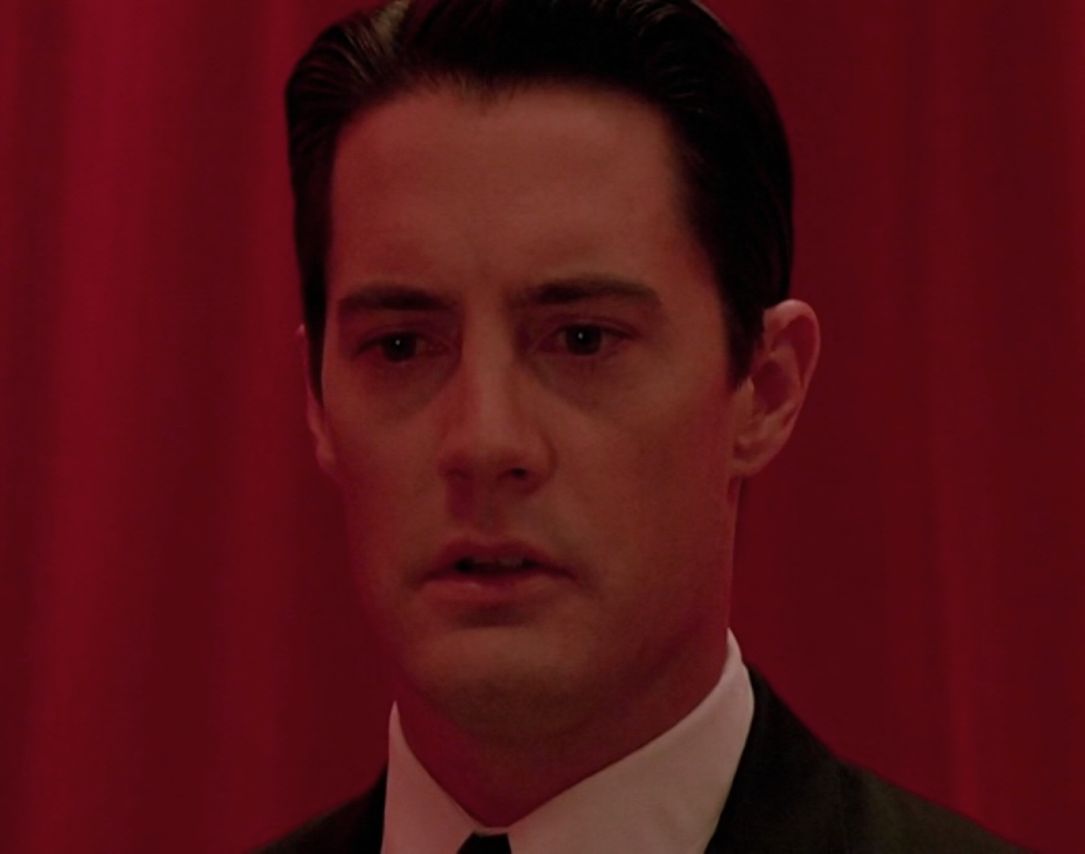
Not
that I’m complaining about hiccups in a film as dynamic as this. After all,
Lynch is especially gifted with nonsensical material, turning messes into
hypnotic cinema, and “Fire Walk with Me” continues that tradition. It’s a scary
movie with flagrant goofballery and a pleasingly knotted soundtrack, also
making time to revel in perversion and self-destruction, instantly making it the
least liked feature in the history of the Red Hat Society. The effort retains firepower,
bewildering with its brain-melting mysteries, symbolism, and general “Twin
Peaks” outrageousness. Those who’ve devoted their free time to cracking Lynch’s
code have my deepest respect. I’ve seen the film on numerous occasions, and I
still don’t have a clue what’s actually happening beyond the basic questions of
the story. Green rings? Coded police messages in the form of a brightly
decorated female mime? Creamed corn as a manifestation for pain and sorrow?
It’s spectacular to watch, but I don’t have the patience to break the monolith
down into digestible nuggets. I prefer to consume my Lynch as quickly as
possible, embracing the inevitable confusion.
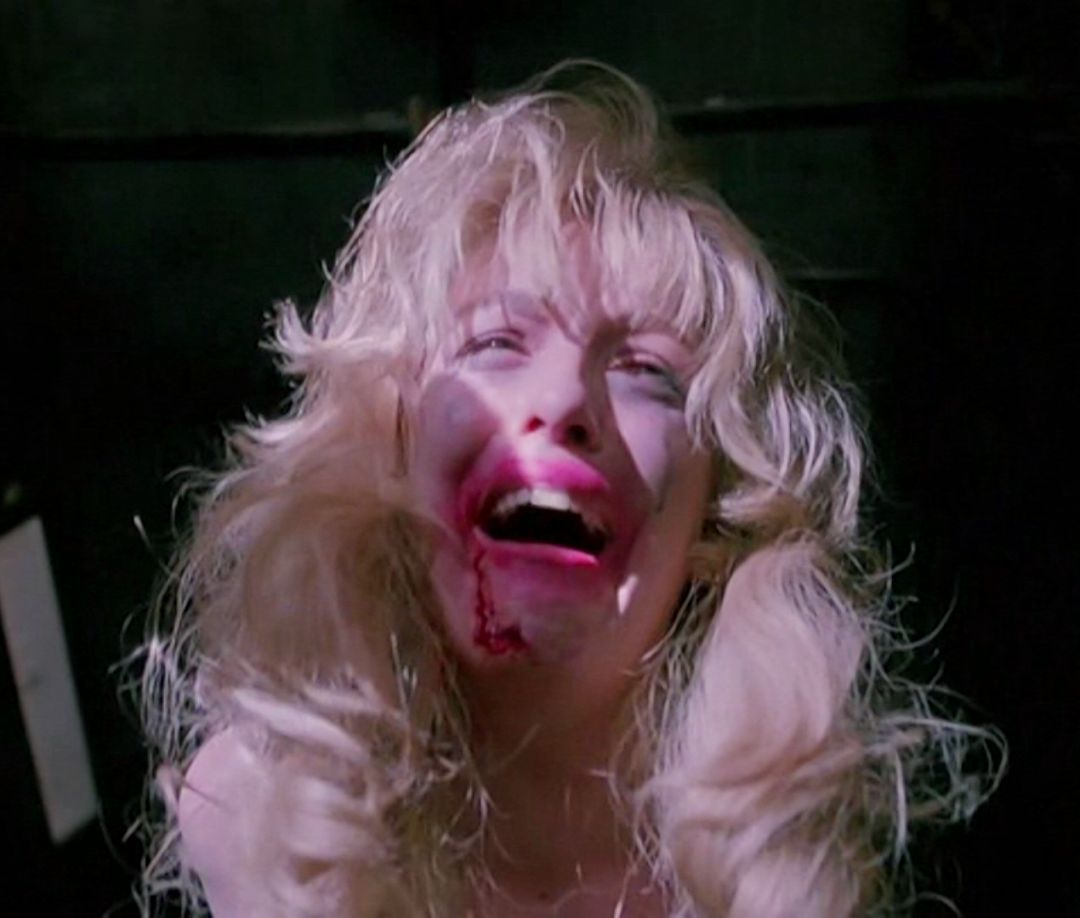
Thankfully,
Sheryl Lee’s convulsing performance grounds the viewing experience some,
helping outsiders grasp the danger and the recklessness of Laura Palmer. It’s
amazingly fearless work, gifting Lynch the whirlwind of emotions he needs to
help certain elements of chaos stick their landings. Ray Wise matches Lee well,
also diving into the deep end of madness with a severe take on the duality of
Leland. The two leads bring something special to the mix, embodying the macabre
and the mysterious with vibrancy and a clear communication of unavoidable doom.

Maybe one day we’ll get a chance to see the full vision of
“Fire Walk with Me.” At least something approaching an expansion of the film’s
scope, with a little more community participation. After all, who wouldn’t want
to mess around in this contaminated sandbox for as long as possible?


Honeymoon in Vegas
Nutshell:
A mild-mannered private detective with a love for gambling, Jack (Nicolas Cage)
promised his mother on her deathbed that he would never marry. Enjoying a
relationship with schoolteacher Betsy (Sarah Jessica Parker), Jack has evaded
her pleas for a marital union for years. However, Betsy is ready to exit the
relationship, prompting Jack to whisk her away to Las Vegas for a quickie
ceremony. Staying in the same hotel is Tommy (James Caan), a feared mobster who
sees a resemblance between Betsy and his beloved dead wife. Rigging a secretive
poker game to push Jack up against the wall, Tommy offers the reluctant groom a
chance to pay back his crippling debt by passing over Betsy for the weekend.
Upset with the situation, Betsy leaves with Tommy, who takes his fixation to
Hawaii with plans to talk her into marriage. Jack, growing restless with the
repayment scheme, tries desperately to make it to Hawaii as fast as possible
and prevent a relationship disaster. Tommy, aware of the potential intrusion,
does whatever he can to delay Jack, giving him time to sweet talk Betsy into
his bed.
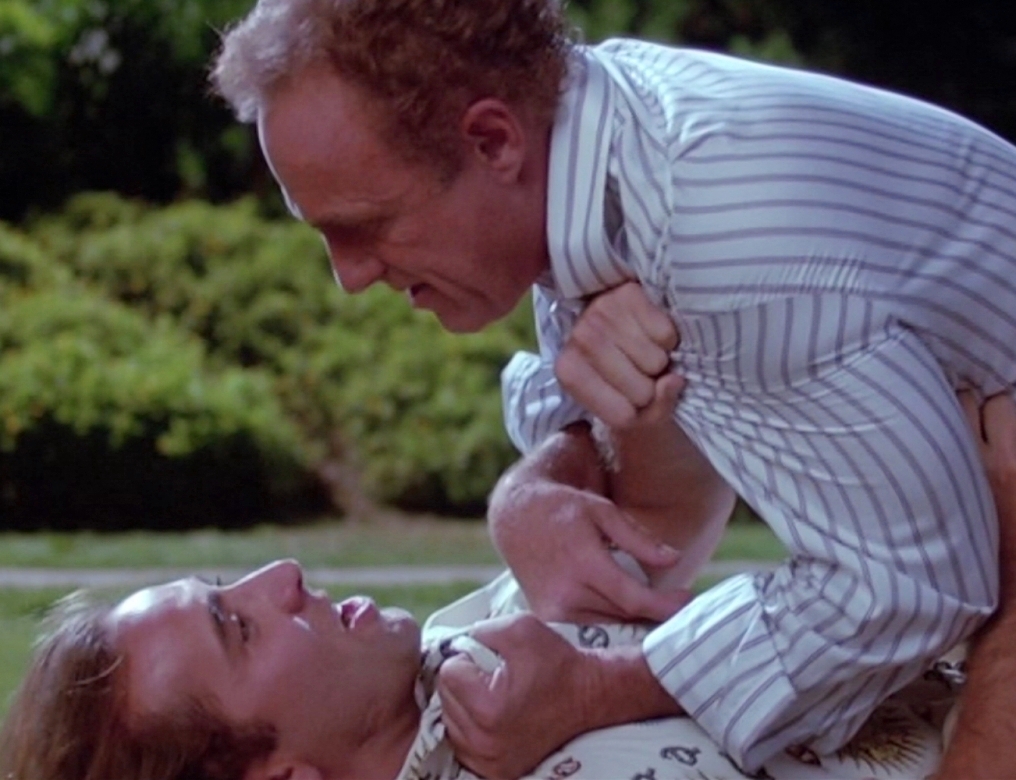
1992: The Nicolas Cage we know today is an actor on the
verge of a career breakdown, accepting any job he can get his hands on to keep
the money train rolling along, no matter how harshly it reflects on his
professional reputation. In 1992, Cage barely had a professional reputation,
outside of being an oddball with occasional good taste in scripts. Perhaps
fearing he was in danger of being nudged out of Hollywood by those who couldn’t
compute his idiosyncrasy, Cage embarked on what he would refer to as his
“Sunshine Trilogy,” three features over two years that would come to redefine
his box office appeal and readjust his reputation for violent quirk.
“Honeymoon in Vegas” was the first of the trio (with
“Guarding Tess” and “It Could Happen To You” following), placing Cage in a traditional
romantic comedy lead role, as a dimwit trying to keep love alive in the face of
nonstop adversity. Although the actor had already worked his way through
numerous genres by this point, “Vegas” was a major step toward mainstream
acceptance, which, in a way, furthered Cage’s habitual need to throw the
industry off his scent.


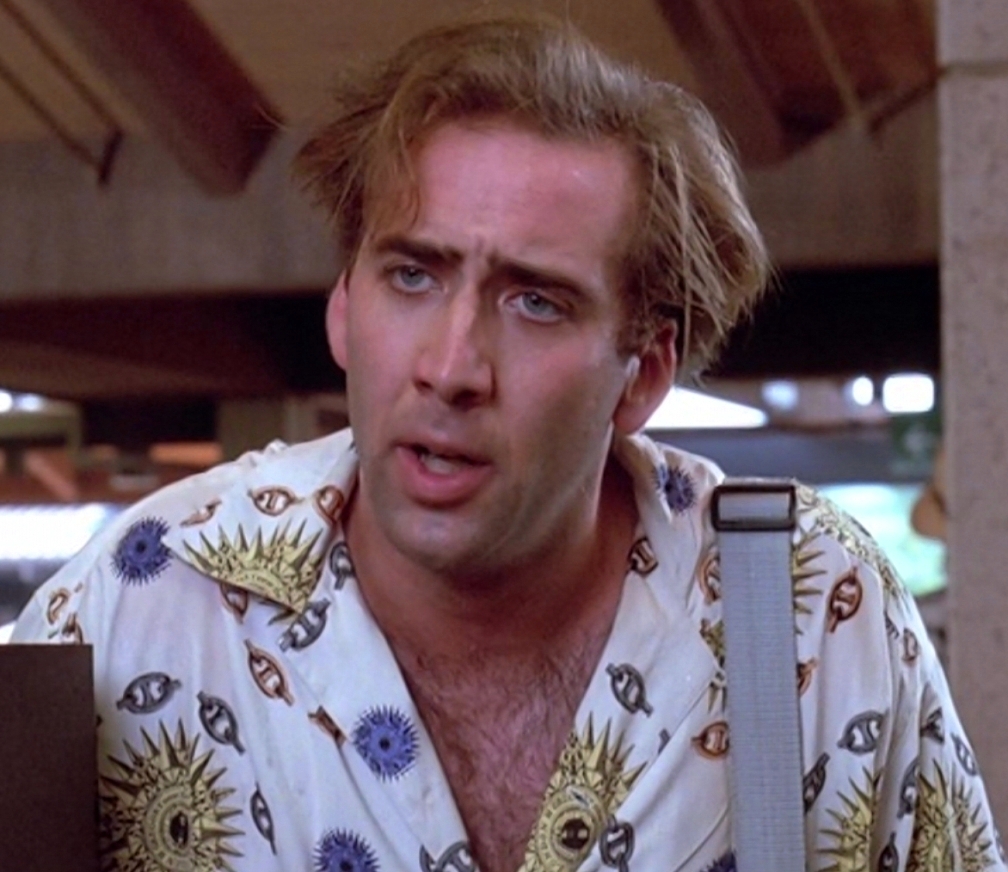
I was a big fan of “Vegas,” finding the feature to be
hilarious and snappily paced, with Cage’s rascally performance a particular
pleasure in movie of many. While most of the media interest in the picture
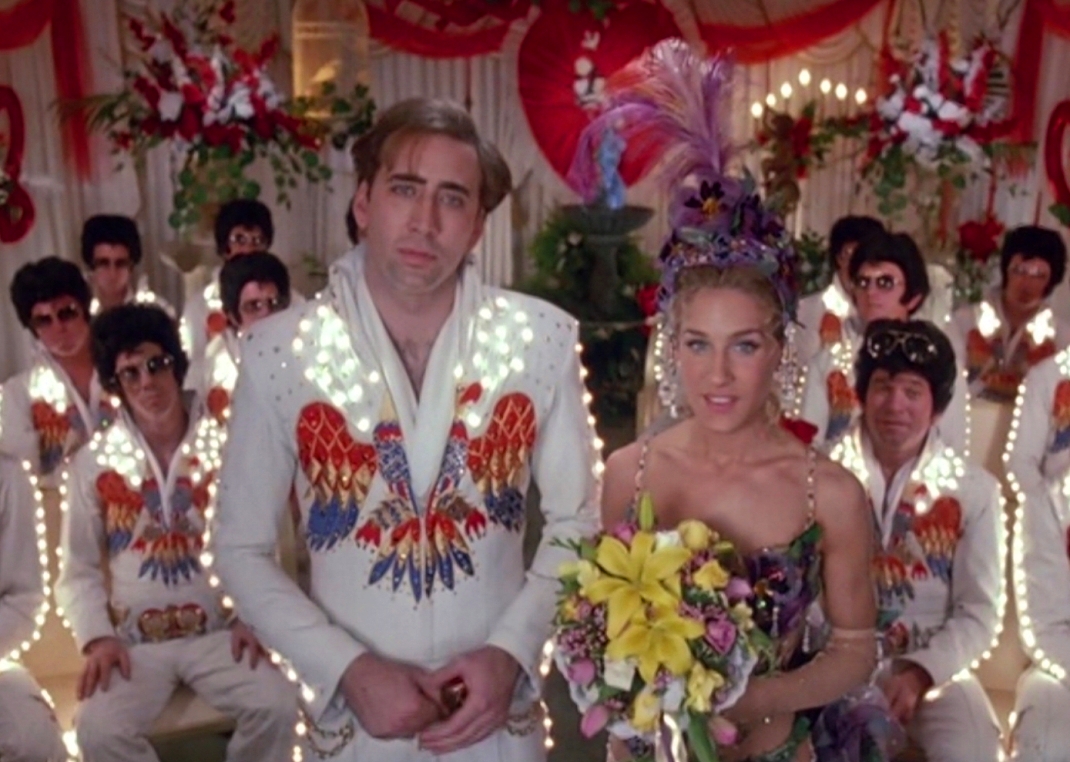
gravitated toward the ridiculousness of the Flying Elvises (skydivers dressed
up as The King), Cage showed tremendous charisma in a tricky role, sustaining
his leading man appeal while stuffing numerous Cageisms in his front pockets
for later use. He was fun to watch, keeping the predictability of the production
down to a dull roar.
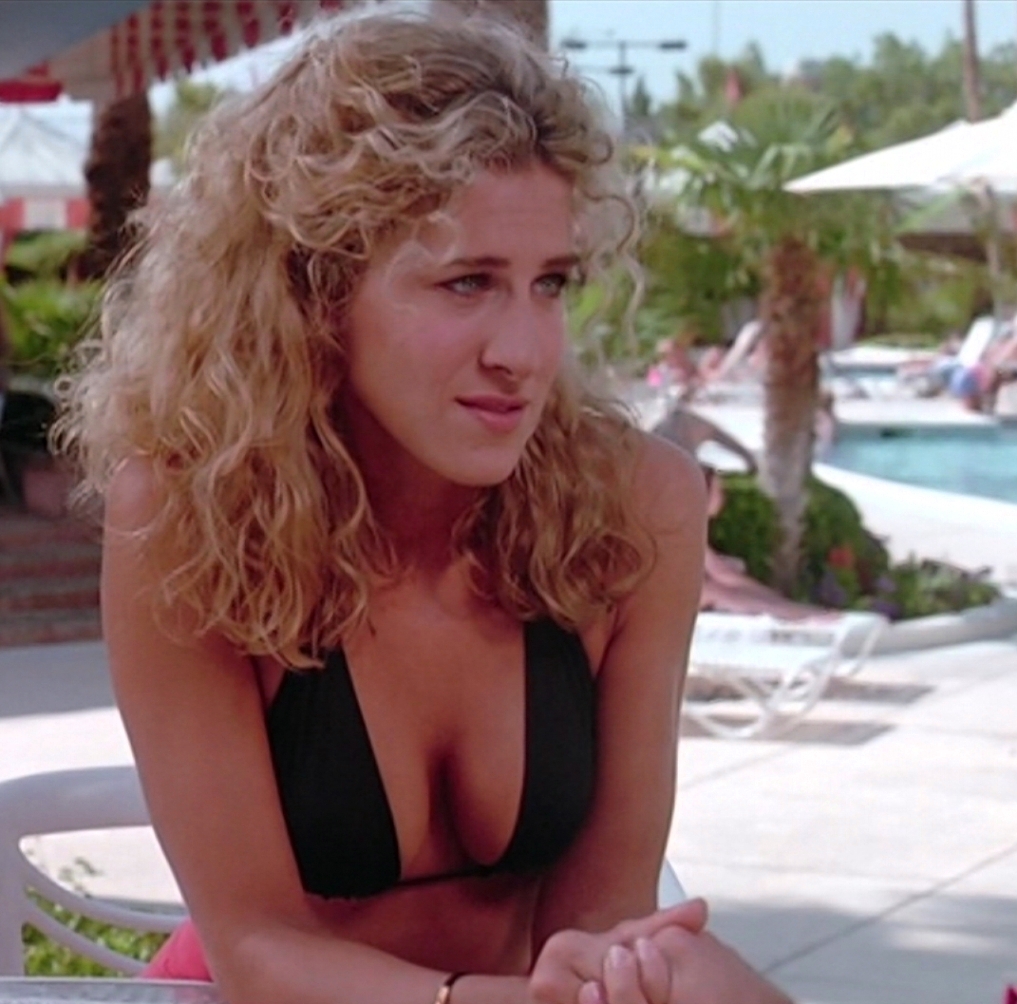
I guess 1992 was also a year to enjoy a Sarah Jessica Parker
performance. Man, how times have changed.
2012:
“Honeymoon in Vegas” feels a lot more insignificant these days, and I’m not
sure if it’s a reflection of my calloused attitude toward romantic comedies or
perhaps I was just enjoying the view back in 1992, without being fully
cognizant of the fluff. It remains terrific fun, with a charming simplicity
that often feels more like a chase picture than anything angling to be sweet,
following Jack as he soars across the world to retrieve his love, only to soar
right back when she begins to fall for Tommy’s tune. Director Andrew Bergman
sweats to maintain a manic vibe to the proceedings, but it’s a slack effort,
working to keep the three lead characters dimensional human beings while
preserving the material’s light farcical approach. I think the movie nearly
achieves a wonderful cruising altitude, yet seems determined to disrupt the
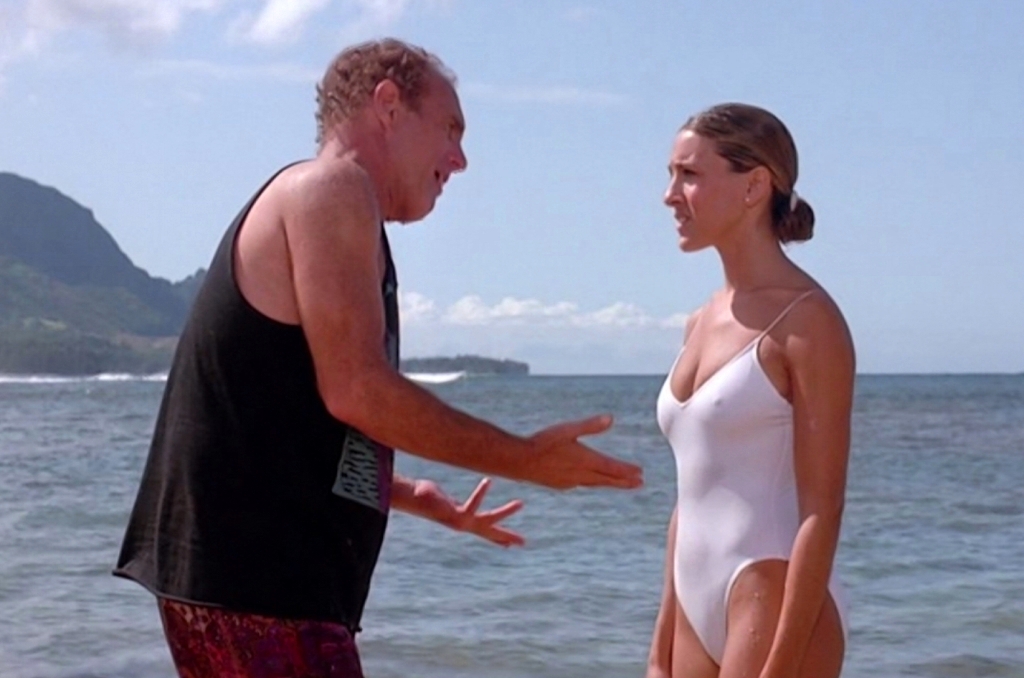
pacing with a few dud jokes, including an extended visit to a Hawaiian hippie
(played by Peter Boyle) that’s intentional in its purpose to delay Jack from
further travel on the island, yet offers no laughs. It’s a missed opportunity.
The
real curiosity about “Honeymoon in Vegas” these days is Cage, who’s feral and
free, all youthful and eager to try on the silk lining of a mainstream comedy.
He’s developed into a sour man sniffing around for paycheck gigs, but two
decades ago he was a searching actor, trying to entertain himself with quirks
and a busted volume knob, breathing life into a potentially dreary comedy. With
his wild, thinning hair and general look of disease, Cage’s interpretation of
Jack’s desperation is a total hoot, bravely unglamorous and consistently
agitated. Nowadays, these tics and whammies are expected, rehearsed into the
ground, so it’s highly entertaining to revisit Cage and his relatively new toys
of screen communication, spicing up “Honeymoon in Vegas” with manic attitude he
expresses so wonderfully.

Less
interesting is Caan, doing his umpteenth version of the irritated mobster/tough
guy routine, though this is possibly his most alert performance of the 1990s,
making a credible pass at seduction while visibly enjoying the Hawaiian
locations. Parker is less appealing, here during her sex kitten phase where the
studios tried to turn the awkward actress into a lustful female lead. Somewhat
whiny and stuck with a script that turns Betsy into a ghoul with rash marriage
plans, Parker is forgettable, caught between Caan’s screen comfort and Cage’s
impression of a chewed wad of Red Hots. You can tan, highlight, and bikini the
woman all you want, but it’s not going to make her memorable next to these
guys.

“Honeymoon in Vegas” keeps the giggles and the humiliations
for Jack coming, yet it’s the ending that’s the most successful element of the
feature. Bergman does a fantastic job escalating the picture to a position of
madness, requiring Jack to jump out of a
plane to save Betsy, accidentally joining the Flying Elvises on their
celebratory run over Las Vegas. Rare is the movie that actually knows how to
conclude in a satisfying manner, delivering spectacle and a little dollop of
romance while clinging to the traditional swatting of the baddies. It’s not a
particularly challenging climax, but it sends the effort off on a convincing
celebratory note, making the storytelling speed bumps feel less intrusive.
Pet
Sematary II
Nutshell:
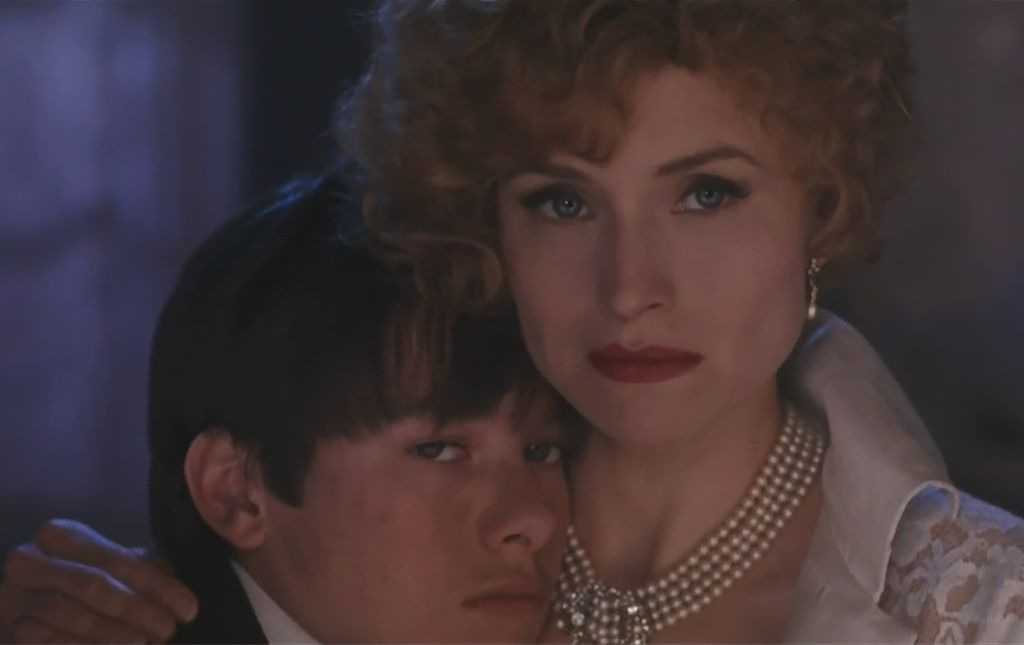
After witnessing the electrocution death of his mother, beloved movie star
Renee (Darlanne Fluegal), teen Jeff (Edward Furlong) has joined his father,
veterinarian Chase (Anthony Edwards), in Ludlow, Maine, to help settle his
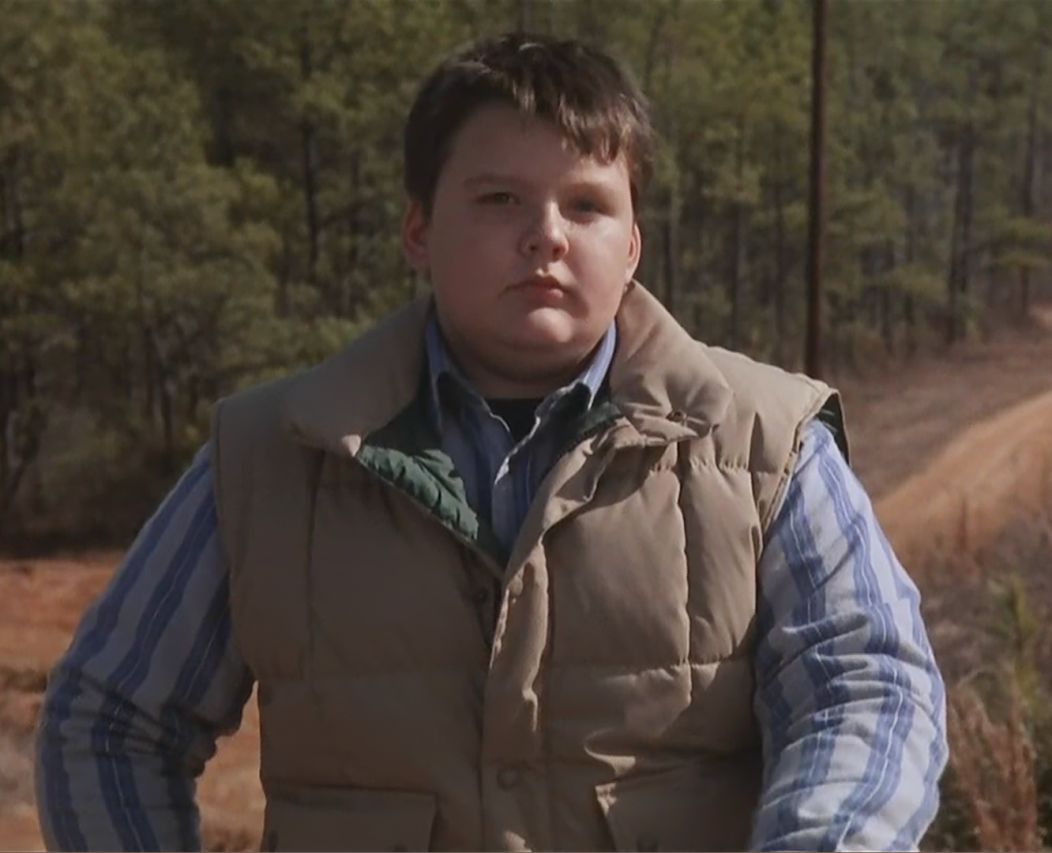
grief. Facing trouble from bully Clyde (Jared Rushton), Jeff befriends Drew
(Jason McGuire), an angry kid trapped under parental pressure applied by his
stepfather, town sheriff Gus (Clancy Brown). When his beloved dog is shot by
Gus, Drew takes the pooch to a special Native American burial ground that can
bring back the dead, who return with slightly demonic traits. When such
troublemaking escalates to the murder and reanimation of Gus, Jeff and Drew
discover the true nightmare of the “Pet Sematary,” along with its potential to
reunite Renee with the family she was so coldly removed from.

1992:
In 1989, I was invited by a friend to see “Pet Sematary” at a pre-release
screening held in an incredibly uncomfortable theater where an unruly crowd
gathered to watch the latest Stephen King adaptation, bubbling at the thought
of springtime frights distributed by an author who built an empire on sickening
events and troubling characterizations. While the picture played acceptably
with the amped crowd (it’s not a feature interested in a routine of cheap
thrills, but slow-burn madness), one scene sent the audience into a tizzy.
There’s a moment in the midsection of the movie where we meet Zelda, the
diseased sister of Rachel Creed (Denise Crosby), who’s imagined as a sickly
woman with demonic trimmings, contorted into a dreamscape monster meant to
cause great distress for Rachel and the viewer. Director Mary Lambert really
finds a clever way to bring Zelda to life, emphasizing bony body parts and dousing
the character in nightmare fuel, creating interest in a storytelling tangent
any other filmmaker would trim without hesitation.

Well,
the Zelda scene not only worked on this screening crowd, but practically
kick-started a few heart-attacks and ruined fresh underwear throughout the
theater. Once Zelda lunged toward the camera, these giddy ticketholders
collectively jumped sky high. Rarely have I seen an audience freak out in such
a manner, causing tremendous unrest, ruining any scenes that dared to follow
it. It was moviegoing beauty tattooed on my brain, while solidifying “Pet
Sematary” as a special picture in my eyes, capable of great disturbance and
creative acts of directorial evil. It also struck gold at the box office, leading
Paramount to do what studios do when they make a healthy profit.
They
ordered up a sequel. A “Two” for number two.
“Pet
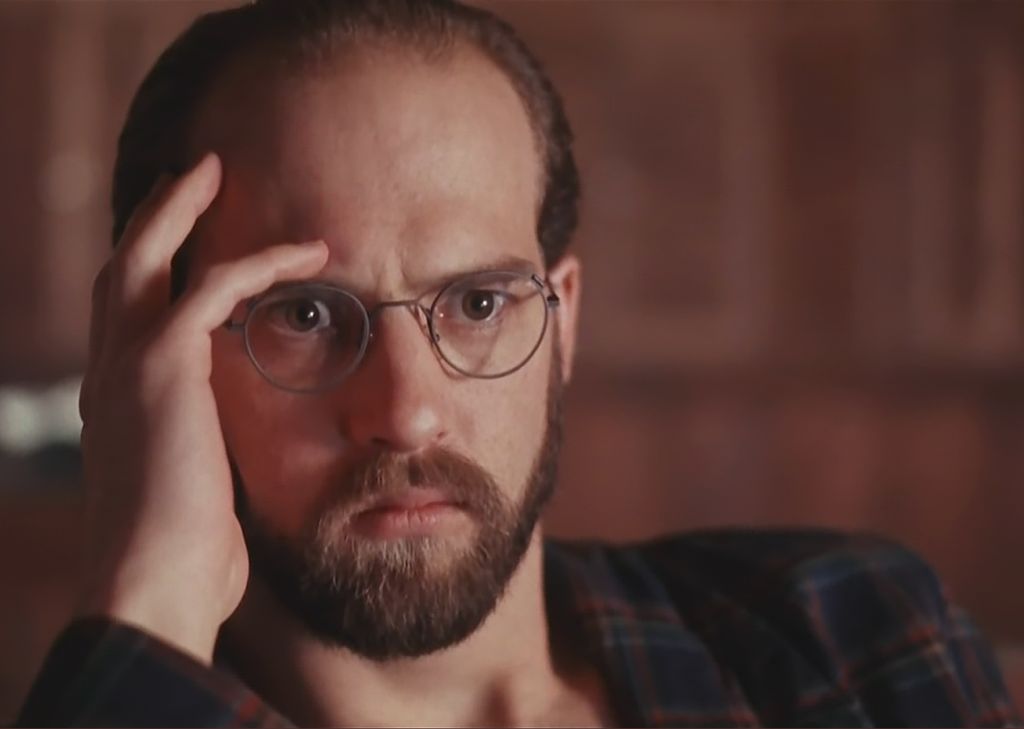
Sematary Two” failed to match the original’s sheer nutso energy and enticing
creep, preferring punishing offerings of gore over a stable stream of suspense.
And to be perfectly honest, there were some expectations in place before the picture’s
release, despite a story heading in a new creative direction and the selection
of Edward Furlong for the lead role, then Hollywood’s latest it-kid for
productions in need of a whiny semi-actor with the face of a “Deadliest Catch”
veteran. The sequel welcomed the return of Lambert to the “Pet Sematary”
universe, but that didn’t seem to bring a pulsating evilness to the
proceedings. Instead, the follow-up died in a hurry, lacking the original’s
atmosphere, madness, and King-stained ghostly shenanigans. Paramount simply
wanted to build a fresh cash machine with a semi-remake, yet this time the
magic wasn’t there.
The
ghoulishness that was so intoxicating in “Pet Sematary” was depleted in the
sequel, replaced by a ho-hum effort that craved time with blood and guts, not
the unnerving stuff that has the potential to dive audiences crazy.

2012:
After a promising set-up (at least promising for a needless sequel) with the
death of Renee and Jeff’s arrival in Ludlow, “Pet Sematary II” takes a sharp
turn into pure nonsense. It’s hard to believe Lambert directed both films, as
the sequel is such an inept, confusing, pitiful creation, coming nowhere near the
full scale haunt of the original picture. This “II” or “Two” or “2” (depending
on your info source) is laughably bad, almost worth a recommendation to
cinephiles on the prowl for a sequel that’s a polar opposite viewing experience
than its predecessor, at times almost relishing its waywardness. “Pet Sematary
II” looks like a feature that quickly slipped out of Lambert’s control, and she
decided to drive the production into the ground out of spite.
While
the process of sequelizing King without King’s participation is a daunting
prospect, the script (credited to Richard Outten) doesn’t make much of an
effort to summon a similar claustrophobic tone of insanity. With the powers of
the burial ground established, Lambert introduces more of a darkly comic tone
to the follow-up (frosted with a score straight out of a Vivid Video title),
with Gus’s mid-movie undead rampage played largely for laughs…I think. It’s difficult to tell what the
movie has in mind during any given scene, with the writing and direction in
separate corners, refusing to speak to each other. Attempting to build on the reanimation
concept, “Pet Sematary II” takes the gore show routine, robbing the picture of
interesting characters and a general taste of delusion. Instead, we’re stuck
with dopey kids in way over their head, yet they fail to acknowledge their
troubles with any sort of recognizable facial reaction or genuine human
impulse.
The
acting is atrocious in the feature, with pros like Edwards surviving to the
best of his ability despite projecting looks of concern for his career, while
Brown doesn’t know how to play anything with a degree of subtlety, wearing Fred
Gwynne’s Maine accent from the first film like an iron sweater. In the lead
roles, Furlong and McGuire (who lasted for two more movies before ditching
acting altogether) are too drowsy to matter, glumly going about their business
when scenes require a generous helping of disbelief, or at least mild
curiosity. A parade of undead creatures is treated with all the excitement of a
bible reading by these two, with Furlong especially flimsy as the O.G. John
Connor moved forward on his unlikely acting career.
Previous
complaints about violence are confirmed with a second viewing. Aggressive is
the treatment of animals, arguably a crucial component of the plot, yet handled
exploitively by Lambert, who teeters on the edge of relishing the opportunity
to use sights of dead kittens, skinned rabbits, and wounded dogs to provoke the
viewer. It’s not a parade of slaughter that would be allowed in contemporary
cinema, solidifying the feature’s 1992 origin. Better is the monster make-up,
though most of it is neutered by MPAA tampering, attempting to soften a
surprisingly hostile effort. Even the bullying antics with Clyde seem
overheated and silly, creating obvious enemies to pad out the thin story,
killing time before someone finally gets around to digging up Renee’s body for
the burial ground day spa treatment. That’s what everyone is waiting for, yet
the production seems reluctant to indulge the wish right away. After all,
there’s a perfectly boring story to tend to and amateurish directorial
flourishes to digest before anything of substance can commence.
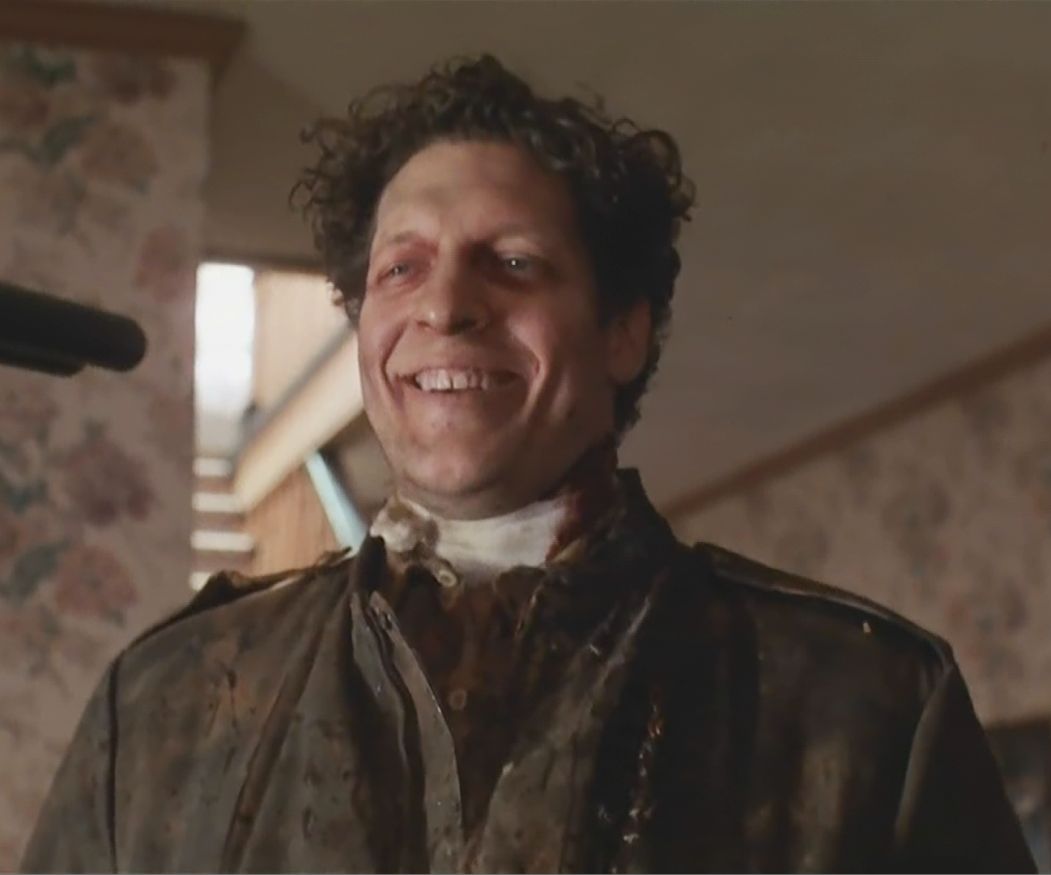
To
close out the film with a real head-scratcher, Lambert elects to “honor” the
dead by reminding the audience of those who perished during the feature,
rolling through footage of the characters before the end credits hit awkwardly.
It’s a bizarre artistic choice that almost needs to be seen to be believed. In
fact, here it is (in an indeterminate language):
Wow. If ever there was a feature that cried out for a
director’s commentary, it’s this one. Lambert really needs to sit down and
share the particulars of her headspace during the creation of the movie. “Pet
Sematary II” is begging for such an
inspection.
 BRIAN ORNDORF
Leave a comment