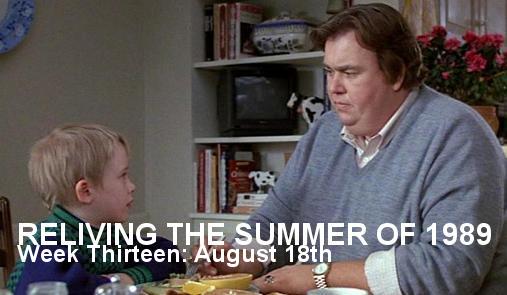
Embracing the care of “Uncle Buck,” horrified by the “Casualties of War,” introduced to “Cheetah,” and feeling the urge to “Let It Ride.”
August 18th, 1989
Uncle Buck
Nutshell: Caught in a medical emergency, Bob Russell (Garrett M. Brown) is forced to turn to his wayward brother Buck (John Candy) to help watch his children, much to the horror of his wife, Cindy (Elaine Bromka). Now in charge of repulsed teenager Tia (Jean Louisa Kelly) and kids Miles (Macaulay Culkin) and Maizy (Gaby Hoffman), Buck finds his immaturity unable to cover his new responsibilities, forcing him to grow up and take command of the family, while desperate to keep girlfriend Chanice (Amy Madigan) interested in his bachelor lifestyle.

1989: “Uncle Buck” was a feature that took its sweet time to grow on me. I saw the film initially at a promotional screening with an appreciative audience, there for free but eager to love. Knowing the blue-ribbon John Hughes brand only through his phenomenal teen-centric entertainment, it was a divine surprise to find the maestro drilling his way into the bank vault of family entertainment — at the time, a newfound diversion for the filmmaker. Back then, “Buck” was just a new John Candy comedy to me, and that was all it needed to be. It would take multiple viewings and grad-school scrutiny to appreciate its Hughesian flair and specific comedic embroidery.
The silliness and tenderness of “Uncle Buck” were tones painted with primary colors, but it was enough to enchant me. I hold these vivid memories of the screening, recalling the reactive bursts of laughter from an audience that was sideswiped by the film. Sold a slapstick bonanza (the image of the bowling ball falling on Buck’s thick head was the driving force of the marketing), “Uncle Buck” was smarter than the average fall-down-go-boom comedy. Hughes and Candy made a tremendous effort to instill their film with a nice edge of discomfort and wit to best inflate the laughs. The picture boogied differently and I can still sense the growing trust of that audience (and myself), who arrived girded for a blast of stupidity, but walked away with a comedy that put some effort into creating a world for the characters, thus nurturing stronger bellylaughs.

2009: I write this only a few weeks after the death of John Hughes, unable to cease marveling over his iconic filmography. When I was 13 years old, “Uncle Buck” just worked for me, which was a miracle worth celebrating. Today, I look upon the picture as a comedic highpoint for Hughes, who corralled everything he was known for to construct a melodious ode to the shock of irresponsibility.
I adore “Uncle Buck” much like I adore the rest of the Hughes oeuvre, but I find “Buck” to be his lone evergreen hit. In many respects, the comedy of “Buck” is timeless and endlessly entertaining, mixing bachelor buffoonery, domestic disturbance, and teen terror into this strange brew of a family comedy. Over the last two decades, I’ve revisited the picture on many occasions, becoming, I suppose, obsessed with the working parts of the filmmaking. It’s a movie of wondrous edits and pauses, with Hughes wizarding his way through the material with awe-inspiring timing and bravery. It’s a goofy movie, but also extraordinarily sly, unafraid to permit generous screentime to bizarre jokes and situations of slack guardian supervision. A thousand other filmmakers would’ve rested on the innate buffoonery of the Buck character. Hughes took the plot as an opening to encourage monkey business out of left field, while still attending to the broad stuff that pleases the masses. To step back and study the film reveals an intricate carousel of ideas and gags balanced to perfection by the director.
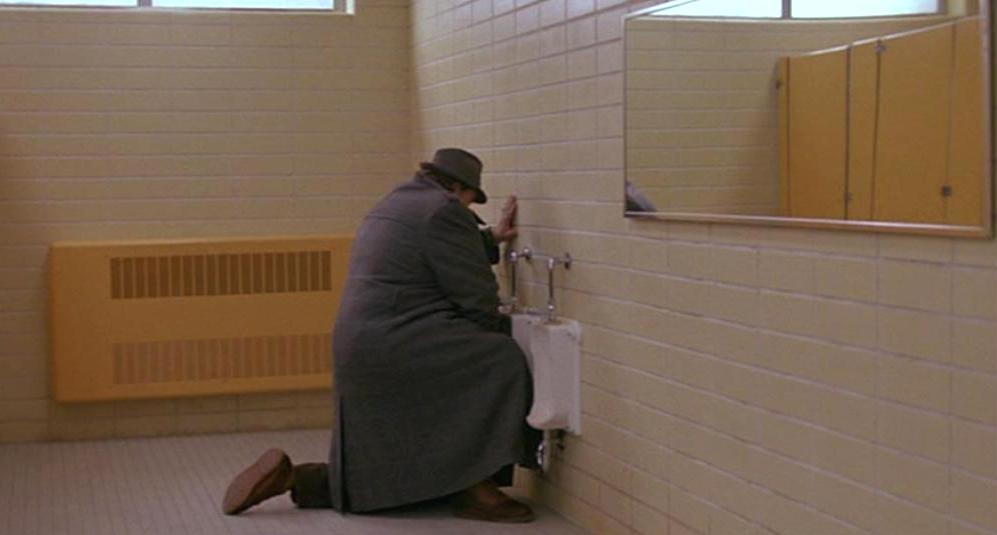
“Buck” also brings to mind the magic of John Candy. Here in his prime (still burning off the career-best fuel he employed with Hughes in “Planes, Trains, and Automobiles”), Candy showcases remarkable low-key charisma as Buck, eagerly playing the character’s hesitation along with his amusing quicksand reaction to responsibility. It’s hardly a RADA audition tape, but Candy strikes a wonderful sad clown tone that Hughes graciously develops through the relationship with Tia, whose angst rubs Buck raw. Candy’s the goods here, hitting hilarious high points and a forceful flow of poignancy, keeping Hughes honest with his obvious stabs at familial melodrama.
Also miraculous here are the two performances from Macaulay Culkin and Gaby Hoffman as Buck’s littlest charges. I personally loathe most child actors, who are always coached into worthlessness, soon developing a special tang of arrogance that’s impossible to point out without coming across as a ghoul. I prefer my kid talent to be malleable, programmed by sharp writing. Hughes understood the purity of an unsullied youngster, pushing Culkin and Hoffman to act like little one-liner machines, jumping into the frame to deliver some of the best dialogue in the picture. The tykes are all eye-bulges and rim-shots, and I cannot even begin to express how much this pleases me. Especially Culkin, who comes off as a freshly unwrapped present in “Buck.” Obviously the Mac Attack would go on to super-fame with Hughes’s “Home Alone,” but he was never quite as fast and furious as he was in “Uncle Buck.”

This film is a joy to revisit. It’s enormously quotable and crammed with all sorts of delicious throwaway reaction shots, offering fresh laughs with every viewing. I’ve said enough (perhaps too much) about the John Hughes legacy already, but it can’t be reinforced enough: “Uncle Buck” was his most underrated gem.

Casualties of War
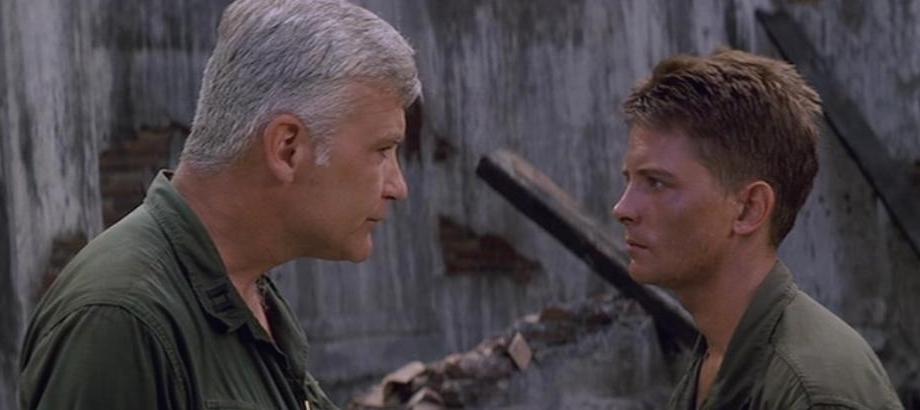
Nutshell: A squad of American soldiers in Vietnam, led by Sergeant Tony Meserve (Sean Penn), decides to kidnap a young Vietnamese girl, dragging her out into the thick of the jungle to rape and torment her. Watching this unfold is Private First Class Max Eriksson (Michael J. Fox), who refuses to take part in the violence. Returning to their base, Eriksson looks to bring the men up on charges, only to find his superiors are unwilling to help and his fellow soldiers want him dead.
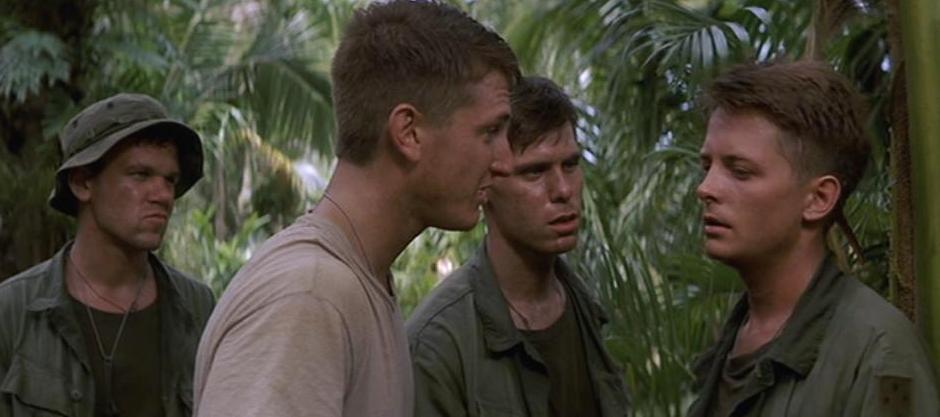
1989: This was a very profound moviegoing experience for me at the time. While Hollywood was in the thick of producing various Vietnam post-mortem pictures, I was way too young to both see these movies and appreciate them to the fullest degree. “Casualties of War” was the first feature to hit me right between the eyes, not only for its nightmarish, tragic combat sequences but also for its disturbing observation of futile military justice. The nuances of the material escaped me two decades ago, but the emotional jolt director Brian De Palma was aiming to achieve grabbed me by the throat. “War” was a glimpse of man’s unrelenting cruelty, amplified by De Palma’s melodramatic stings and Ennio Morricone’s mournful score. It’s a potent movie that would knock the wind out of me for years to come.
Was I too young to see such brutality? Perhaps. Though I viewed “War” and films of its ilk as a great personal tool to help understand (in small fragments) what the world was capable of. Surely the material was coated in a thick gloss of Hollywood design and execution, but the primal elements of the story were needed eye-openers; these stages of violence necessary to harden the heart. It’s a demoralizing motion picture, but to comprehend it roots in reality (the film was inspired by New Yorker article from 1969) really thickens the film’s musty air of misery.

2009: “Casualties of War” didn’t break box office records or pass Oscar gold around to all production participants as intended. In fact, the film was largely ignored upon release (after months of odd press that highlighted the on-set tension between Fox and Penn) and made the butt of a few jokes, most notably from David Spade, who merged Eriksson’s concern with “Family Ties” in a wicked impression. Out of all the Vietnam films, I was still rate “War” fairly high on the list of notable achievements. And the years have been kind to the feature, now free to tell its sorrowful story without bad buzz or whimpers of miscasting weighing it down.
Considering its blood-curdling narrative, it’s remarkable how much I’ve revisited “War” in the past, fueling up on its depressing mood of body trauma and guilt. It’s a beautifully composed picture, benefiting from De Palma’s virtuoso camerawork and his obvious sympathy for the Eriksson character. De Palma could never be accused of subtlety, and that very bravado serves him well in “War,” eagerly playing up the alarm of military duty crossing untold moral lines. Again, “War” is a hyperbolic film, but it still maintains a sizable sock to the gut, spinning the suspense wheel enthusiastically as it details unreal psychological disease. In fact, the train trestle sequence, where Eriksson and Meserve fend off the enemy while the Vietnamese girl limps to her heartbreaking fate, is one of De Palma’s finest directorial moments. It’s a fat glop of obvious screen manipulation that preserves a frightening human core, making the life and death struggle all the more shocking.
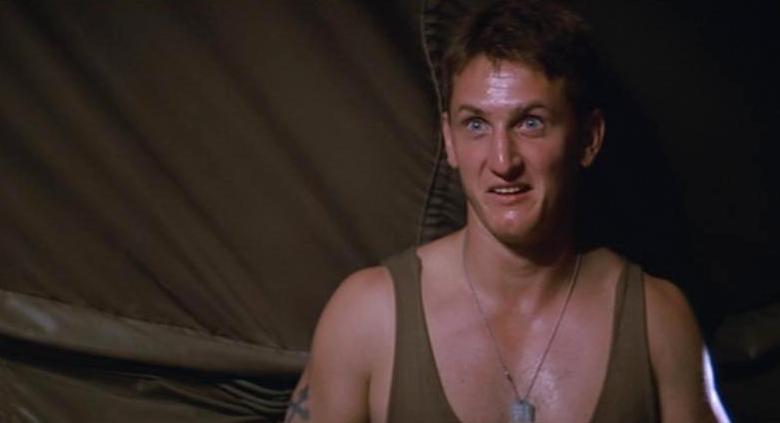
As for Michael J. Fox, boy oh boy, did he ever take heat for his work in the film. There are certain moments where Fox is clearly out of his league, but nothing too off-putting. The role requires a skittish, wet-behind-the-ears transformation — a Technicolor-vivid loss of innocence arc – and Fox finds those beats easily. Besides, how could Fox look anything but alien standing next to Penn and his sweaty, Buttafuoco-like take on corrupted military morality? Penn’s in a bib eating the frame and licking his fingers clean while Fox fights to retain Eriksson’s eroding dignity. It’s a fascinating black/white acting mix that’s always deserved more respect, and De Palma knows exactly how to boil the tension. However calculating it may undoubtedly be, “Casualties of War” is still one hell of a paralyzing, gut-churning movie.
Cheetah
Nutshell: Spending six months in Kenya with their scientist parents, teenagers Susan (Lucy Deakins) and Ted (Keith Coogan) make friends with a local boy named Morogo (Colin Mothupi) and an orphaned cheetah named Duma. When Duma is nabbed by poachers, it’s up the super friends to take off into the wild to rescue their furry, domesticated pal.

1989: The story on “Cheetah” is fairly brief: I didn’t see the film in 1989. In fact, I’ve never seen the movie, making it the rare title of that summer that I stayed away from when I had all the opportunity in the world to catch it. I have no excuse to give here, and its absence from my memory makes this grand finale frustratingly incomplete. Where’s a time machine when you need one.
I include “Cheetah” in this diary entry only because I caught Nick Castle’s 1986 fantasy, “The Boy Who Could Fly,” a few months back and was immediately smitten with its star, Lucy Deakins, who gave a thankless swoon role some welcome spunk. Instead of passing “Cheetah” over due to a lack of history, I figured this was the perfect time to introduce myself to this Disney adventure. Perhaps I made some sort of a silly mistake 20 years ago.

2009: OK, so it wasn’t a mistake. At best, a small, understandable oversight.
“Cheetah” was an attempt by Walt Disney Pictures to get back to their cheap family diversion roots. A mix of a “True Life Adventure” saga and some Jodie Foster/Kurt Russell-style Mouse House teen enthusiasm, “Cheetah” is as vanilla as can be. Produced by Roy Disney, the film is a flavorless trek picture intended to give American rubes a peek at African life, where the natives break out into song (a hakuna matata number that probably inspired “The Lion King” in some small, indirect way), wild animals are adorable, and white people say the darndest things. The film isn’t shy to fit tribal characters with clown shoes too.
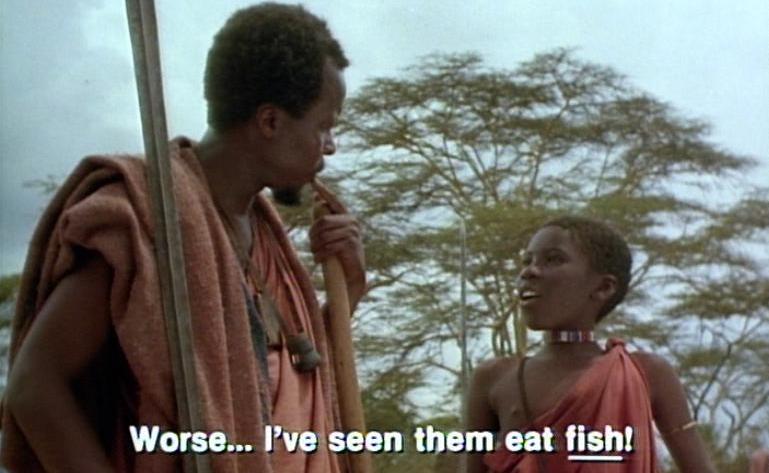


There’s not much to dissect with “Cheetah.” It’s an exceedingly simple story using the lure of golden African locations, animal observation, and teen histrionics to coax viewers in, directed by a guy who used to craft Circle-Vision films for Epcot. In many ways, it’s corny and hilariously dated, an aesthetic that suggests Disney was aiming for a throwback kid adventure, only to brush up against a changing world of entertainment. How can you thrill kids with a cheetah and some gee-willickers when they’ve already seen Batman in action?
Chock full of animal kingdom stock footage (mixed indiscriminately with the performances), “Cheetah” is harmless and lightweight, perhaps hopelessly so (the whole endeavor looks like a glorified after school special). As for the Deakins factor, she was a good actress with strong tough-cookie skills that probably didn’t do her any favors in the shallow Hollywood starlet pool. She eventually ditched her acting career to become a lawyer after only a handful of movies. Probably a smart move. A few more productions like “Cheetah” and I’m thinking her career would’ve gone more Haim than Foster. Deakins played her cards right.

Let It Ride
Nutshell: Jay Trotter (Richard Dreyfuss) is a compulsive gambler trying to stay clean for his doubting wife (Teri Garr). Hearing of a sure thing scenario down at the horse track from his buddy Looney (David Johansen), Trotter places a bet on impossible odds. Winning a huge payout, Trotter spends the rest of the afternoon dodging trouble and temptation (Jennifer Tilly, Michelle Phillips) as he struggles to keep his winning streak alive.
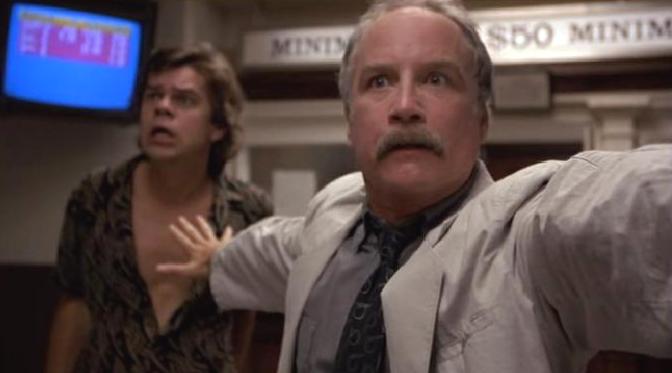
1989: It’s somewhat funny to consider that while I passed on “Cheetah,” I willingly sat through “Let It Ride.” The reasons behind this decision have been lost to an aggressive memory haze, but I did make the bicycle effort to see “Ride.” I’m sure the spastic comedic aspects of the marketing pulled me in (it featured Dreyfuss slip-sliding around the frame), since the rest of this gambling farce wasn’t exactly built to rope in the kiddies. My appreciation for the hilarious highlights of compulsive, destructive gambling wasn’t developed yet.
Lordy, I recall so little about this picture except the experience leading up to the matinee viewing. And perhaps Jennifer Tilly. She made a slight impression on a young me.
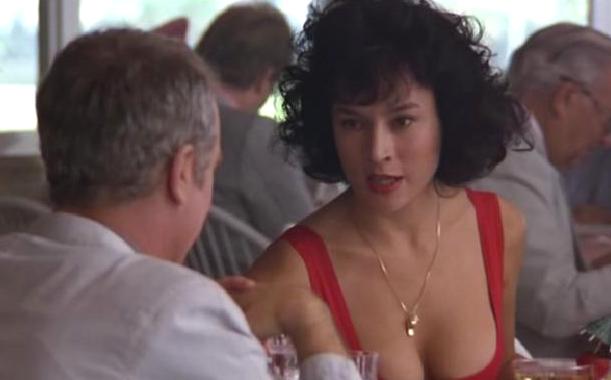
2009: It was interesting to learn during my “Let It Ride” reeducation just how competent the film is. I’ve always quarantined the feature as a limp farcical blur with little leadership or dimension. The truth is more interesting: “Ride” is based on a novel, shot with outstanding ‘80’s gloss, and makes a passing attempt to cover the world of degenerates with engaging clarity. It’s not a great film, but it tries, which is something I never gave it credit for.
At least for the first half, director Joe Pytka cooks up a generous ambiance of hysteria, channeling Dreyfuss’s mustachioed combustion to mount a hopping gambling comedy. It’s light, fast, and colorful, keeping tight on Trotter as he wanders in and out of trouble at the track. It clicks, amazingly, with much of the heavy lifting left to the cast of semi-famous faces (Robbie Coltrane, Richard Edson, Cynthia Nixon, and Richard “Fargin Icehole” Dimitri co-star). Pytka lets the madness run free, and it goes swimmingly up to a certain point.

There’s a sequence midway where Trotter, detained by the cops, watches as his next race heads to the starting line without his bet in place. In a moment of sheer panic, Trotter decides to make a run for it, cartoonishly bursting through the front door on his frantic way to the betting desk. Pytka, for reasons unknown, underscores the set-piece with Looney Tunes sound effects and juvenile scoring. And there, my dear readers, went my interest in finishing “Let it Ride.” There’s not a director around who could recover from that. The Road Runner aesthetic would suit Pytka well for his next film, the 1996 Bugs/Jordan extravaganza, “Space Jam.”

“Let It Ride” limps to its conclusion, though it doesn’t go down without a fight. Pytka struggles to keep the bottle rocket vibe of the movie engaged to the bitter end (electing to break the fourth wall to goose the viewer), but even at 90 minutes, the film’s too long and too undercooked. I understand now why I had such trouble remembering it.

Conclusion
This is the end of the line, my friends. An entire summer reheated, reverse engineered to resuscitate feelings long dormant. What did I learn? That the tastes of youth don’t always carry into adulthood, that the thrill of moviegoing is still there within my black critic heart as long as I remain aware of it, and that “Road House” still rocks. It’s been a treat to slowly waltz through 1989, taking in the details in same patient manner I did 20 years ago. Of course, it’s also been tiring — if I never see “Weekend at Bernie’s” again, it’ll be too soon.
It started as a weird idea and ended a unique opportunity for personal reflection, to swallow mouthfuls of nostalgia. Building this bridge to the past was a kick. Maybe I’ll try it again next summer…


Leave a comment