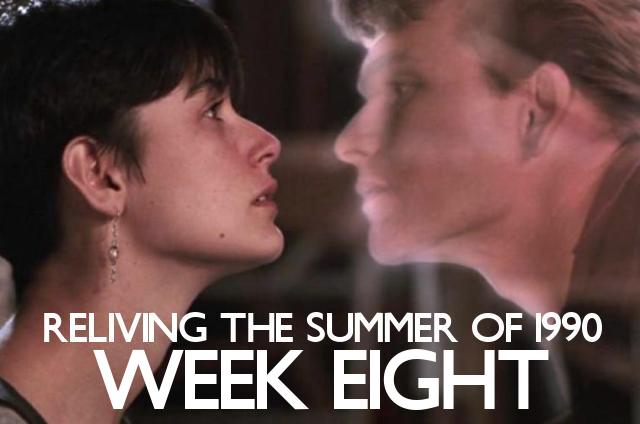
Exploring afterlife yearn with “Ghost,” smoking and detecting with “The Adventures of Ford Fairlane,” and planning an escape from New York with “Quick Change.”

Ghost
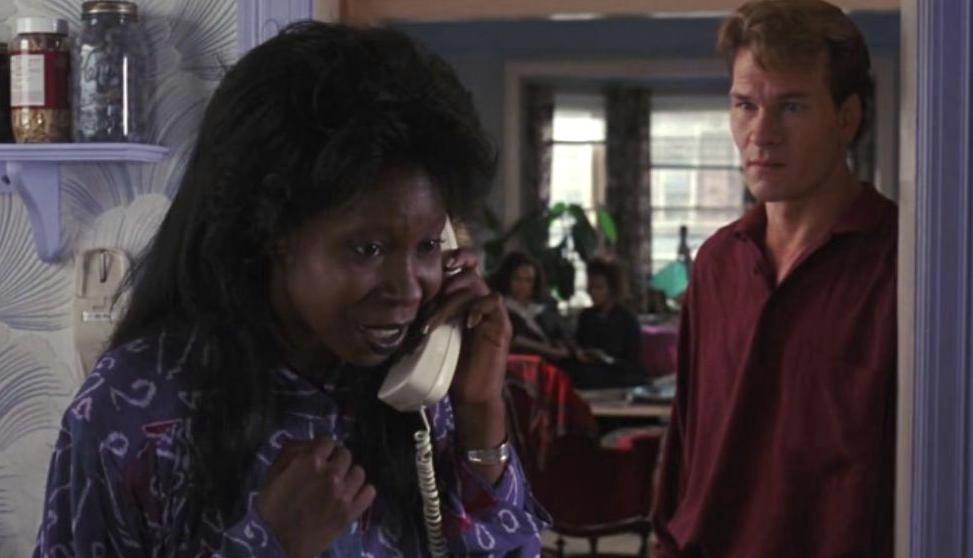
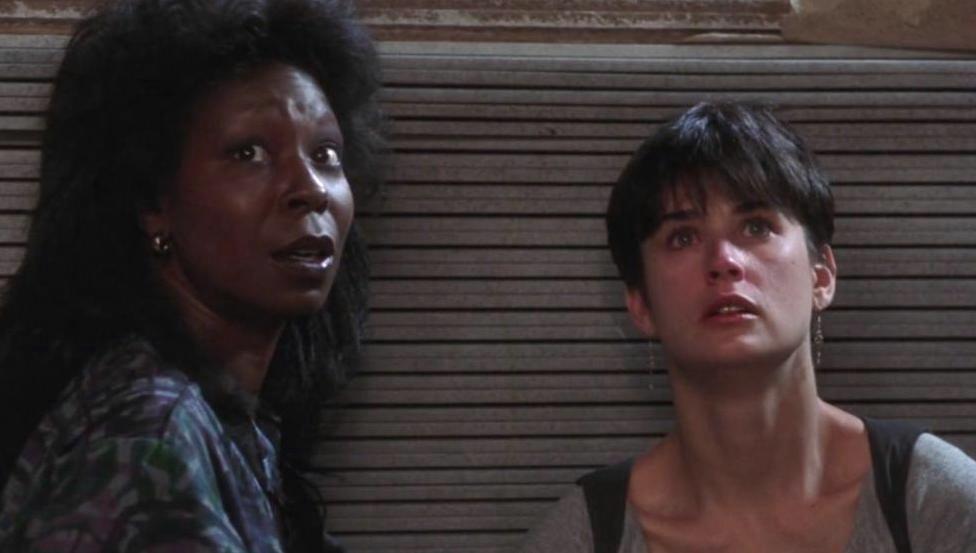
Nutshell: Sam (Patrick Swayze) and Molly (Demi Moore) are hopelessly in love, eager to make a lifelong commitment despite Sam’s discomfort with emotion. Tragically killed during a late night mugging, Sam joins the ghost realm, unable to deduce a purpose as his world is turned upside down. Helping the phantom communicate with the living is Oda Mae Brown (Whoopi Goldberg), a hustler posing as a medium, who can hear the frantic soul, teaming up with Sam to sniff around his shady business partner, Carl (Tony Goldwyn), and attempt to provide some comfort to a grieving Molly.
1990: “Ghost” provides me with a tender memory of falling helplessly for a romantic movie alongside a nation of sniffly filmgoers. It was the sleeper smash of the summer, tentatively released by Paramount without much in the way of pre-release hype. The studio had “Days of Thunder” leading the charge, with little time to pay serious attention to a potentially dopey sudser that starred Patrick Swayze, Demi Moore, and Whoopi Goldberg. On paper, I bet most people dismissed the film’s box office prospects without hesitation.
As Paramount began to screen the film, word of mouth grew to an enticing degree (the movie’s uncommonly sensual poster also helped to fan the flames of positive buzz). Suddenly, this teeny picture about afterlife agitation was something to contend with, and, upon release, audiences proceeded to eat it up, turning the feature into the second largest domestic hit of the year (trailing “Home Alone”).
I was one of those saps who fell hard for “Ghost,” completely beguiled by the film’s fire hose-blast of mushiness and spooky dead-man-walking mystery. I tend to be a sucker for such romantic exaggeration and “Ghost” hit all the sweet spots, reducing me to a puddle of turbulent emotion. It’s easy to dismiss the feature now as a dated tear-jerking machine, brazen about its romantic tugs. However, two decades ago, “Ghost” honestly shot out of nowhere, marched into summertime blockbuster battle armed only with a beating heart and low-wattage star power. It wasn’t expected to be anything special.
The purity of the picture made it an event, encouraging viewers to feel again after a summer season flush with brutality began to numb moviegoers; it was the perfect Tetris brick sliding right into place, arriving at a time when audiences needed a cool down with tenderness. Of course, being a beautifully measured film with capable performances and an attentive script from writer Bruce Joel Rubin helped. “Ghost” won me over in a big way back in the day (placing seventh on my Top Ten of 1990 list), forcing me to back away from the picture for nearly two decades, fearful that whatever miracle was conjured at that special time and place could never be revived. I didn’t want to sully the cozy memory.
I suppose now would be a fine time to ruin a good thing.
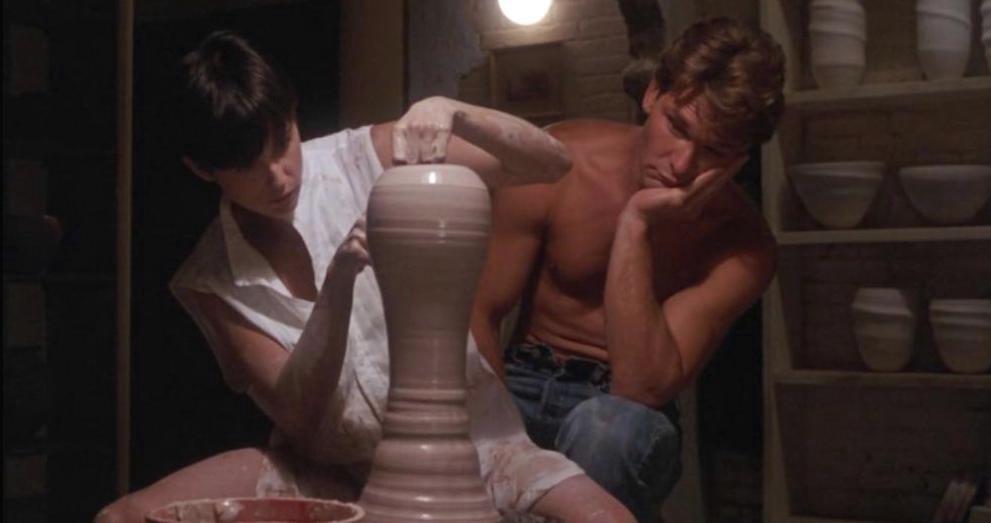
2010: “Ghost” became a certified pop culture phenomenon after its release, soon parodied by any organization with access to bad comedians, with special attention placed on the pottery wheel seduction sequence, set to the timeless tones of the Righteous Brothers and their hit, “Unchained Melody.” “Ghost” was made the fool, as anything of extreme popularity eventually is, but the ubiquitous roasting never quite thinned its cinematic appeal, only wounding its street cred.
With its secrets fully disclosed and legacy settled into a routine of cable showings and home video format upgrades, “Ghost” is revealed to me to be a finely made wad of pap. Googly eyes aplenty, some hokey dialogue, and perhaps too direct a view of the afterlife, but “Ghost” is a smoothly crafted picture with superlative surfaces of suspense, drama, and sentimentality. Even today, the picture plays extraordinarily well.
Of course, there is an air of sadness to the film now. Goldberg, such a feisty, lovable personality in the picture, has been mummified by her age — her role as the elder statesmen on “The View” emblematic of her slide into the sedate, sunglass-peeking bore she is today. Demi Moore twisted into Demi Moore 2.0, preserving her youthful appeal through medical miracles, while still chipping away at her middling acting career. And Swayze…well, Swayze’s actually a ghost these days, having tragically lost his battle with cancer in 2009.
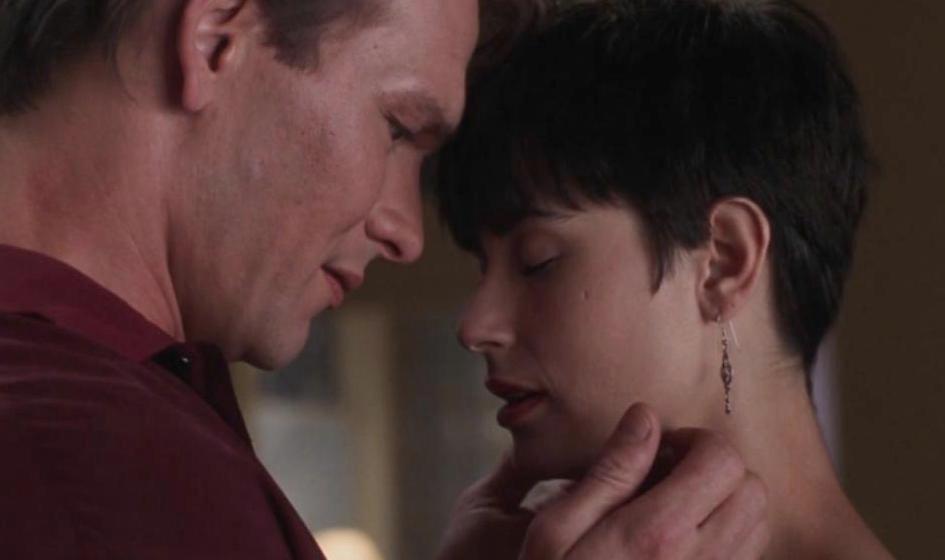
Regardless of how the future turned out for the cast, “Ghost” displays three actors working at the peak of their screen charisma, with Goldberg actually nabbing an Academy Award for her feisty work here. The filmmaking is impeccable, with lovely cinematography to bedazzle the romantic mood and propulsive editing by Walter Murch, but the acting carries “Ghost” to the finish line, urged to achieve sincerity to the emotional flow, avoiding the drag of melodrama. “Ghost” plays its notes superbly, sending viewers through a wringer of heartache while successfully building a push of creepy conflict to pay off the conclusion. It’s an earnest picture, striking a very specific chord in 1990 and holding that rare wholeheartedness in 2010, with only technology, hairstyles, and costumes giving away its true age.
Also nudging the film along is its unexpected weirdness, embodied by character actor Vincent Schiavelli, here as a fellow spirit who teaches Sam how to channel his rage and sneak through to the real world. Director Jerry Zucker is mindful of death’s emptiness, pulling “Ghost’ away from an exhaustive sap-a-thon to tinker with the darkness and madness of this puzzling purgatory prison. It’s not much, but the shadows pepper the picture with surprise, creating an edge to the viewing experience, keeping the material from devolving into an unnerving routine of Demi Moore and her creepy ability to tear up on command.
There’s nothing ironic or detached about “Ghost,” which is a major reason why it’s held up so well. It’s easy to be cynical about the picture and its ensuing success, but the reality is a motion picture that achieves every last one of its goals, and accomplishes this task through thoughtful thespian efforts, considered direction, and a magnetic hold of romanticism that glues together a crowd-pleaser of the highest order.

The Adventures of Ford Fairlane
Nutshell: The “Rock ‘n Roll Detective,” Ford Fairlane (Andrew Dice Clay) is called into duty when the death of a popular singer (Vince Neil) brings about a host of suspects who all want his help to solve the crime. Heading into danger with his assistant, Jazz (Lauren Holly), Ford navigates a sea of troublemakers with his customary attitude, staring down sleazy record executive Julian Grendel (Wayne Newton) while hunting for Zuzu Petals (Maddie Corman), a dim-witted teen runaway in possession of all the answers.
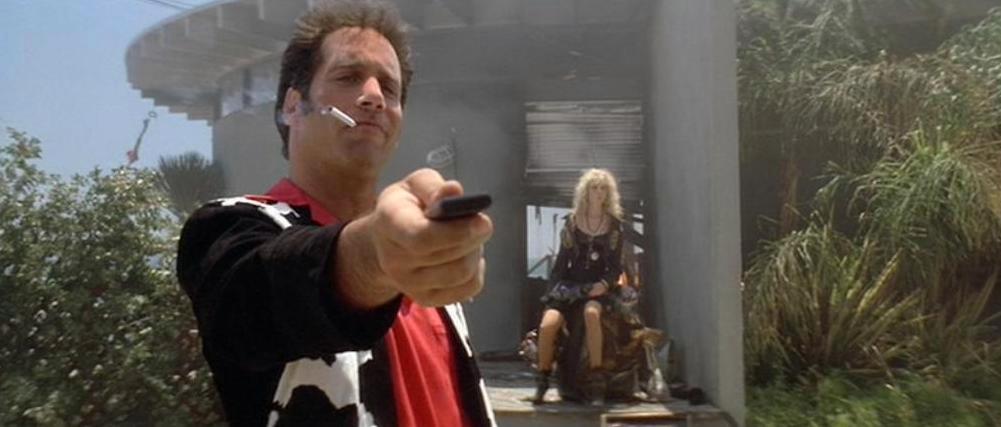
1990: A hateful, misogynistic, foul-mouthed jokester, Andrew Dice Clay was one of more vivid comedians of the 1980s. For an impressionable kid like me, he was a dream come true. Between Dice and Sam Kinison, the comedy cupboards were stocked full with absolute filth; the comics stormed the gates of American good taste with a verbal assault style of stand-up that turned the profession inside out, building upon the taboo-detonating foundation laid in the ‘60s and ‘70s. These salty sailors of the comedy seas morphed into icons, playing stadiums, becoming fixtures of shock jock radio, and slipping into feature films. Despite the brusque tone of their jesting, these pranksters attained remarkable media ubiquity.
Andrew Dice Clay was perhaps the most iconic figure of the movement, working his way through the stand-up trenches before hitting the big time, riding a wave of megafame that lasted only a handful of years, but it was quite a blinding shot of vulgarity. Perhaps not the most technically proficient comedian around, Dice enchanted with his idiosyncratic stage behavior (think a chain-smoking, tic-spitting Fonzie), ribald material, and his penchant for dirty nursery rhymes. These days, it all seems so ludicrous, but back in 1990, at least for young men who weren’t digging on the likes of Elayne Boosler, Andrew Dice Clay was the ideal antidote to the static atmosphere of comedy. He was raw, ready with insults, and gloriously un-PC — a bitter candyman who appreciated the finer points of shock value. At least on the way up, Dice felt fresh and winningly vile, with his “act” a necessary talking point for sharing time in junior high hallways.

Making a go of acting as his stand-up career was bubbling, “The Adventures of Ford Fairlane” was Dice’s first starring vehicle, tailored to his leather-wearing, pompadour-patting shtick. A murder mystery fused to a slapstick caper, the picture didn’t bother to brush away Dice’s controversial stage persona, encouraging the original cigarette smoking man to bring his clawed comedian side to the big screen, with only slight embellishments to give the actor something to play. Surrounding Dice with an oddball supporting cast (including Priscilla Presley, Morris Day, and Tone Loc) to keep matters distractingly colorful, “Ford Fairlane” was intended to rocket the comedian’s fame into the stratosphere. Now with the multiplex conquered, there would be no stopping Andrew Dice Clay. Oh!
Unfortunately, the film bombed at the box office despite deafening media interest in Dice at the time. Justifiably targeted by various advocacy groups for his profane act, Dice went from emperor to pariah in the blink of an eye. “Ford Fairlane” was caught in the crossfire.
It should come as little surprise to learn that “Ford Fairlane” was a real highlight for me during the summer of 1990. A funky, loose action comedy, the film provided an opportunity to examine Dice for 90 solid minutes — a marked improvement from the scattered view I had to gather as a sheltered child, with help from sympathetic friends. Expecting some dingy, low-wattage comedy, the movie actually showed signs of life, with director Renny Harlin (his second release in two weeks, though “Ford Fairlane” was shot before “Die Hard 2”) making an effort to stylize the film and bump along its cartoon tone. Expecting a barrage of loutishness, the movie was more attracted to a lighter atmosphere of merriment and clowning around, finding a superb way to roll Dice into a big screen adventure that wouldn’t stop every five minutes to cherry pick from his routines. Despite my objection to a subplot concerning a young boy hiring Ford to find his lost father (the Brichives called it “extremely boring”), “Ford Fairlane” wailed on the funny bone with great enthusiasm. It wasn’t exactly the concert film-like experience I was anticipating, but it turned out to be something more enlivening and utterly rewatchable.

In fact, attempting to view “Ford Fairlane” a second time almost gave me a heart attack at a tender age. Some of these R-rated adventures required outstanding skill in the art of the theater sneak-in. With bulging megaplexes today, it’s a breeze for underage kids to see whatever they desire. Back in 1990, it required a finer, ninja-like touch. With “Ford Fairlane” playing at the local five-plex, fear of capture from some twerp usher was major issue. My second slice of the film was achieved during a quiet afternoon, which meant attempting to go unnoticed through a nearly empty lobby — the horror! Buying a ticket for “The Jungle Book” reissue, I slipped ever so carefully, ballet-slipper softly, into the “Ford Fairlane” theater, only to find maybe five gentlemen tops waiting for the film to start. Yarg!
The good news is that I wasn’t kicked out, able to devour another screening of the film before it was rudely booted from theaters. The bad news is that showing was one of the most tense and paranoid moviegoing situations I’ve ever experienced. I was in constant fear of ejection, but I survived. Shaky and distracted, but I wasn’t busted, despite various theater monitors sent down the aisle to check for trouble. Pheew.
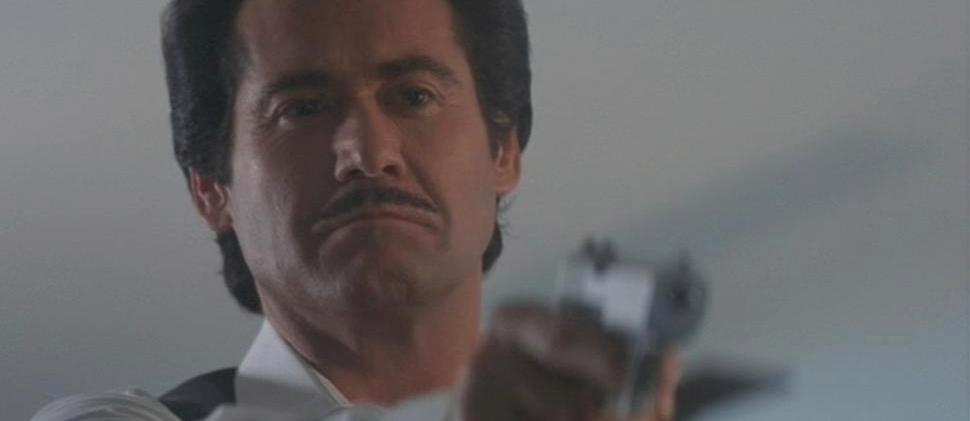
2010: Instead of becoming cringingly dated or just plain sad, “Ford Fairlane” has remained quite a potent guilty pleasure in my life. I’ve returned to it several times throughout the years waiting for the picture’s oddball flavor to dry up, but it’s never happened, remaining an exuberant romp with a healthy sense of self-awareness, and packed with eager performances clearly in step with the tone of the piece. It’s not high art, make no mistake, but it’s harmless fun with a breezy ‘80s ambiance — a neon playground with a cross-eyed soundtrack (Richie Sambora covering Jimi Hendrix?), smoky widescreen cinematography, and a cool snapshot of Dice when he was king of the world.
I can’t say that I’ve ever become a fan of the orphan boy subplot or Dice’s attempt to turn himself into a music star with the mid-movie “If I Ain’t Got You” musical number (an organic character point, but a pretty shameless addition), but the picture has a few surprises to keep itself on the move, and a healthy sense of humor that mines Dice’s delivery superbly while keeping the rest of the action in a more familiar state of hysteria.

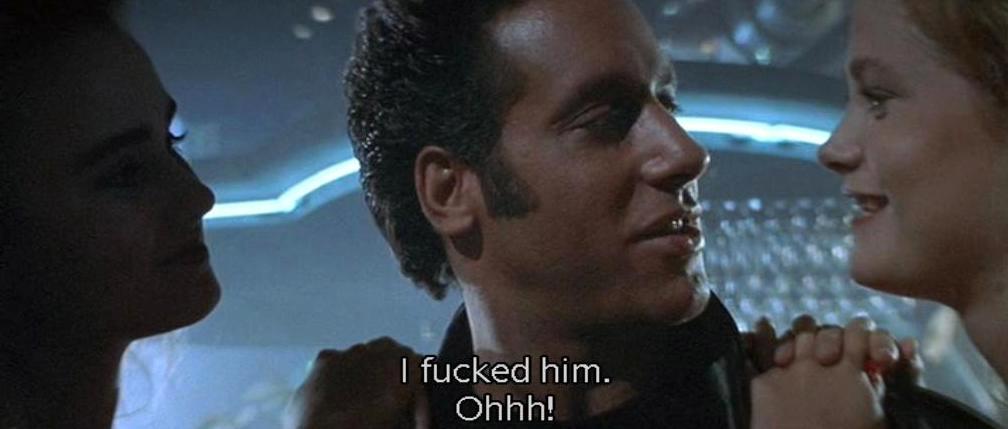
“Ford Fairlane” feels like a filthy Muppet movie at times, with so much frantic screen action to peruse, delivered by a plucky cast. A personal favorite member of the ensemble is actor Robert Englund as Smiley, a vicious assassin who's slammed around during the run of the movie, ready with his signature “Hello, hello” line to greet his victims. It’s the most fun England’s been outside of the crispy Freddy Krueger makeup. Wayne Newton chews the scenery marvelously as the baddie, keeping the feature in the upper registers of its slightly camp tone. His flaming milkshake comeuppance pleases me to no end. Of special curiosity is Gilbert Gottfried as the Howard Stern-like radio D.J. who sets the plot in motion. Perhaps I’m not up on my Gottfried filmography as well as I could be, but “Ford Fairlane” marks the only time I’ve seen the comedian act like a normal human being, stowing his booming screech of a voice to play it semi-serious for once in his career. It’s borderline nightmarish.
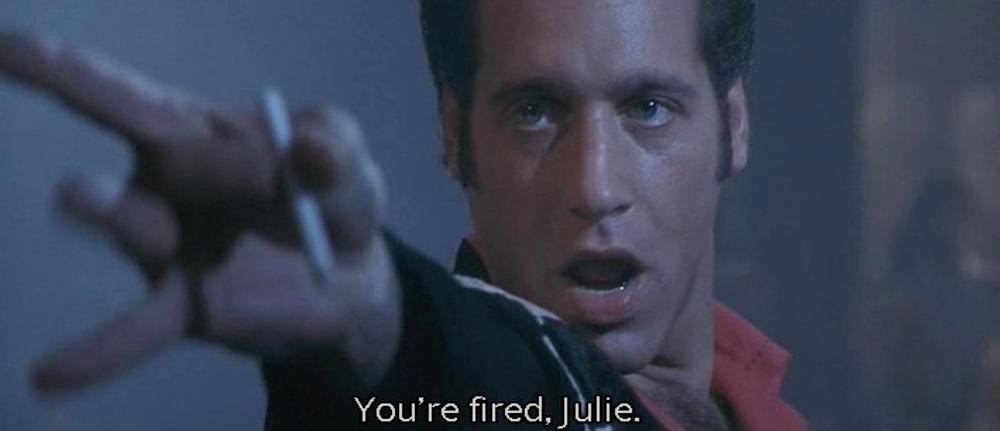
And who could forget Ed O’Neill as antagonistic cop Lt. Amos, who likes to remind Ford of his aborted shot at world supremacy with the disco smash “Booty Time” any chance he gets.
Harlin makes swell use of the hazy L.A. locations, delivers a few acrobatic action beats, holds the music industry ambiance vital to the proceedings, and allows Dice to do his thing while keeping the comedian contained to quieter roar of attitude. Of course, any appreciation of the film depends on a personal tolerance of Andrew Dice Clay, but it certainly isn’t a lazy, throwaway feature cashing in on his fame. There’s a tremendous amount of effort onscreen to make the laughs stick and the mystery move.
“Ford Fairlane” is endlessly quotable and always watchable — an R-rated cartoon scripted with spunk. While its vision of music industry scheming is something stuck painfully in 1990 (the once mighty magic of data CDs doesn’t extract the same awe these days), the rest of the picture still flies high, supplying hearty laughs with every viewing. Again, it’s a guilty pleasure, but a film I feel undeserving of any immediate dismissal.

Quick Change
Nutshell: Fed up with life in New York City, Grimm (Bill Murray) arranges a Midtown Manhattan bank heist, using a complex scheme of disguises and accomplices to help him slip out with the money, past frazzled hostage negotiator, Chief Rotzinger (Jason Robards). Racing to the airport with love Phyllis (Geena Davis) and doofus pal Loomis (Randy Quaid), the trio stumbles through a series of mistakes and criminal activity as they race to make their flight out of the country.

1990: “Quick Change” was my first taste of R-rated Bill Murray in a theatrical environment. Growing up, I’d come to recognize Murray as the PG/PG-13 man, with a string of tamer product that offered the actor a wider audience for his deadpan mastery. Racier fare such as “Caddyshack” and “Stripes” were reduced to television staples, with all the nasty business peeled out for my prime time consumption. Not that “Quick Change” was a riotously blue affair, but it certainly portrayed Murray in a more hardened manner than I was ever permitted to witness before, in a perfect role too: a quick-witted curmudgeon let loose inside a city of idiots. That deserved a few more potent swears for dear old Bri.
Despite its more cosmopolitan, world-weary viewpoint, “Quick Change” delighted me as a kid, due in great part to the film’s biting farcical tone and lived-in appeal, as Murray (who co-directed with Howard Franklin) took on New York with a distinctive viewpoint, capturing the city as an endless maze of misery from which there was no escape. Dodging boobs, brutes, and psycho bus drivers, the film held steadily to laughs as Grimm and the gang wound their way around town, with a crack comic timing to the picture that could only emanate from Murray’s sardonic mind (goosed along by author Jay Cronley’s source material).
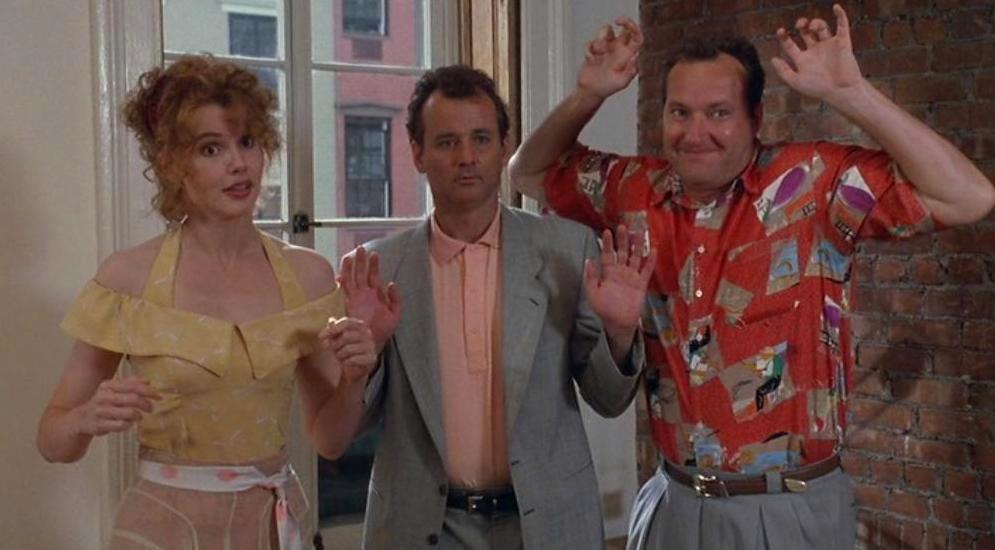
“Funny, funny, funny” was my written reaction in 1990, tickled by this unconventional box office bust. “Quick Change” also supplied a larger appreciation for Bill Murray, who was merely a fast-talking Ghostbuster to me at that point. The picture urged me to learn more about the comedian, which eventually grew to slavish fandom. Murray was always a magical funny man, but something about “Quick Change” made me consider the performer in a different light. It’s a shame he never directed again. He seemed to have a flair for it.

2010: At this point, I’m not even convinced “Quick Change” could qualify as a cult film. It’s a forgotten film, lost to the continuous grind of new releases, barely allowed a chance to come up for air. That’s an unforgivable moviegoing crime.
Easily a top-five career highlight for Bill Murray, “Quick Change” is a comedy jewel, squeezing a rare amount of mileage out of its fickle star, who appears atypically invested in the picture’s mechanics, as opposed to the skilled acts of coasting he’s built a career upon. It’s a film of suffering and accident, playing to the actor’s strengths as the superior being looking over all the riff-raff of life. The press here is the New York setting, which is handed a delicious pantsing few productions dare to deliver, dragging the trio through the hellish underbelly of life in the Big Apple. Rarely shown without its tiara, NYC is lacerated splendidly in the picture. The movie would make one heck of a double feature with “Taxi Driver.”
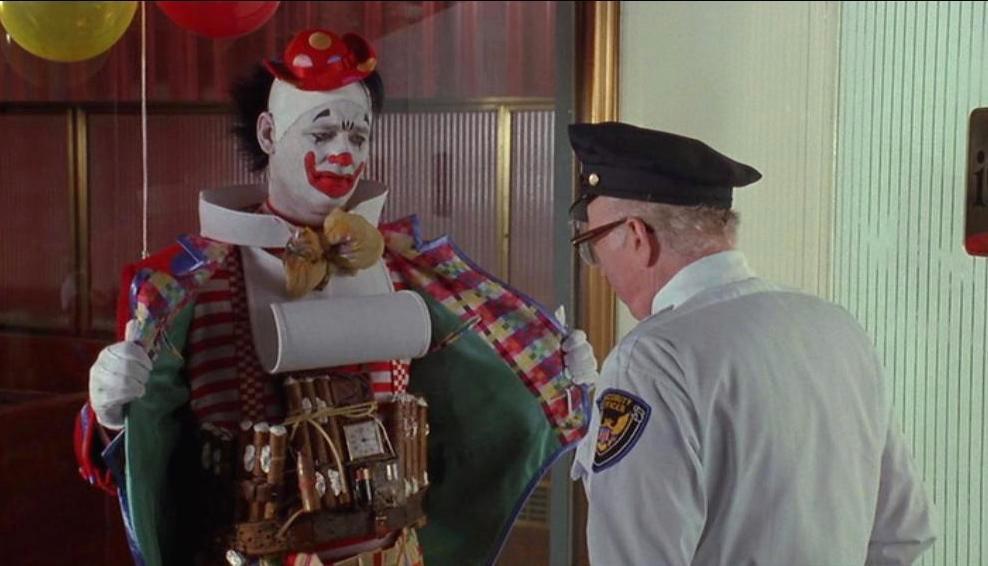
“Quick Change” isn’t the most rotund film (it might’ve benefitted from an extra adventure for the trio), but it remains a fluid viewing experience that volleys between one-liners and discomfort, creating a swirl of laughs and winces as the urban quicksand slowly swallows our protagonists. Comfortably episodic, the film leaps nimbly from encounter to encounter, building a feeling of hopelessness as things go from bad to worse. The gang coming across a Latino bicycle jousting ceremony is a film highlight (“It’s bad luck just seeing something like that!”), with Murray and Howard playing up absurd moments like that with healthy sense of amazement and pokerfaced grace. “Quick Change” has a real snap to it, provided in part by Randy Edelman’s groovy score and the feature’s smooth editorial confidence, which moves between gag and plot without much in the way of disruption.
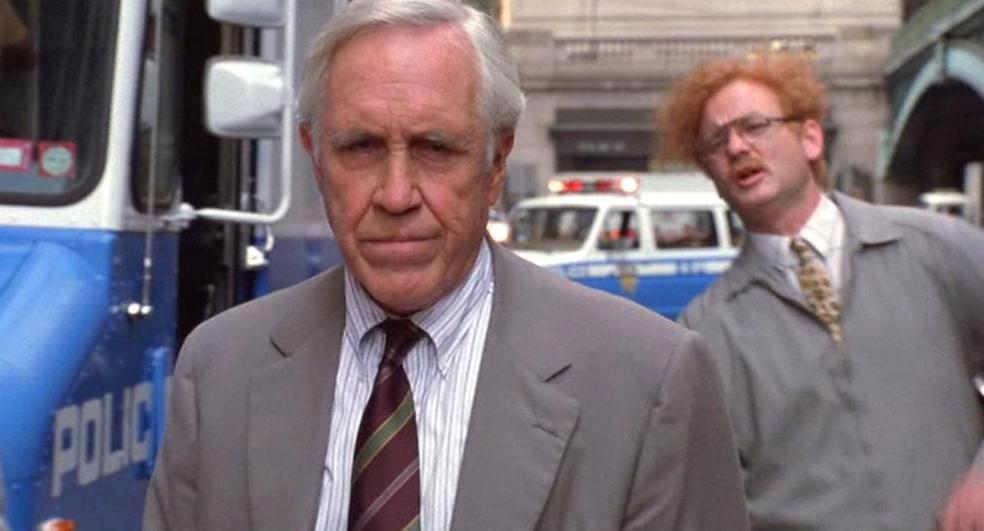
While Murray, Davis, and Quaid get the broad material, Jason Robards is handed the heavier weight of exposition. The gruff actor appears to enjoy this silly stretch, communicating the concern of the plot while entertaining his own acts of comedy. It’s an elder cop role that traditionally sinks any story, but Robards understands how to wring his scenes for annoyance and laughs, creating a memorable character out of Rotzinger when anyone else might’ve remained on the stern side of reaction.
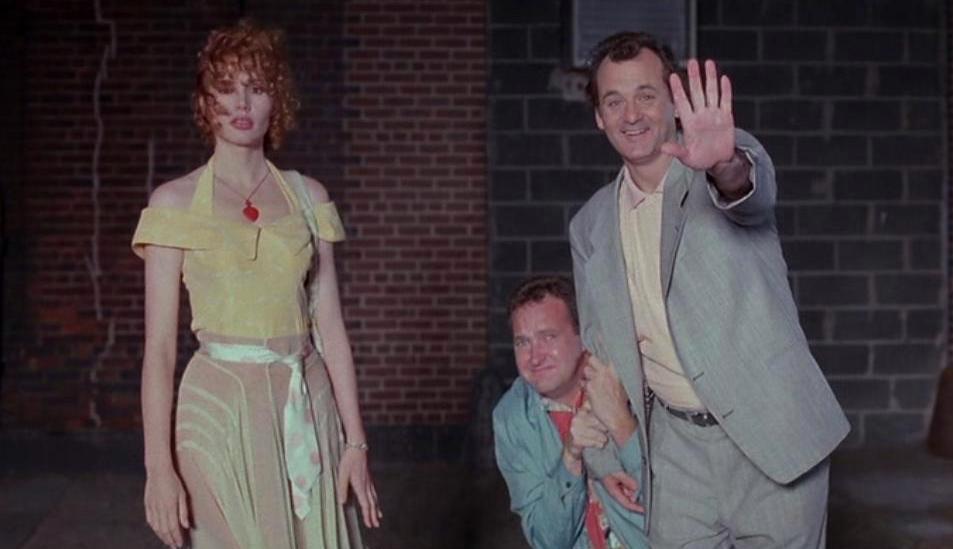
Zany, surprising, sly, and utterly charming, I’m not sure why “Quick Change” isn’t the celebrated comedy it should be today. It’s a modest farce, but a righteously consistent one with bright performances, knowing city cinematography, and Mr. Murray up front and center, delivering the kooky and the scheming effortlessly. The film’s toxicity and silliness is a beautiful thing to behold. If you haven’t seen the picture, do me a favor and seek it out.
Coming next week…
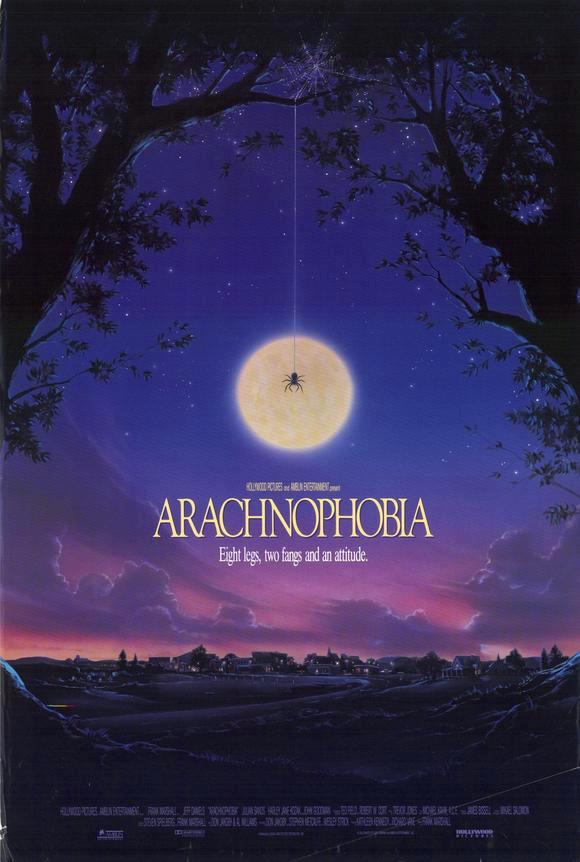
The boys (spiders) are back in town.
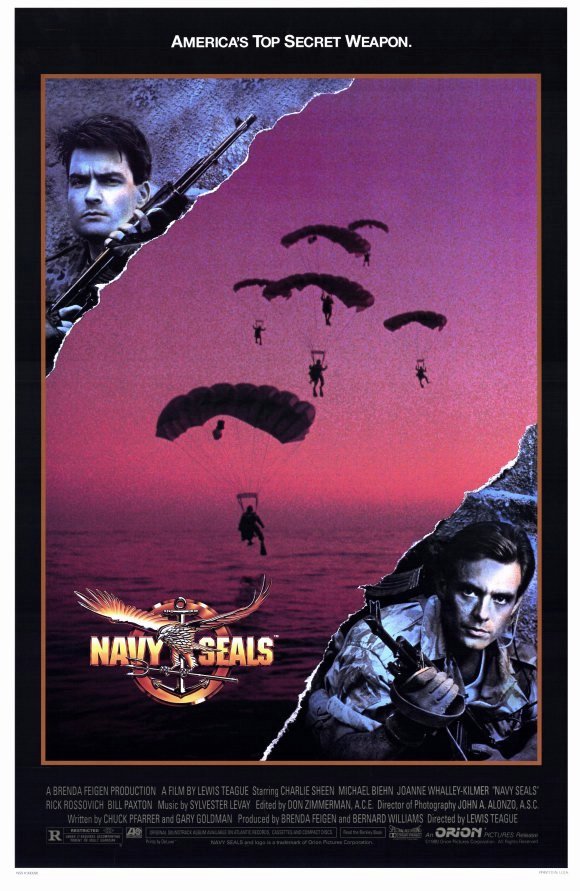
“Oooh, Navy Seals!”


Leave a Reply